
Addiction to pornography can significantly impact your mental health, leading to issues like anxiety, depression, and decreased self-esteem. As you struggle with compulsive behaviors, it may become increasingly difficult to maintain healthy relationships and engage in meaningful activities. Understanding the signs and symptoms of porn addiction is important for recognizing when it’s affecting you. For further insights, you can explore What Does Porn Addiction Look Like?.
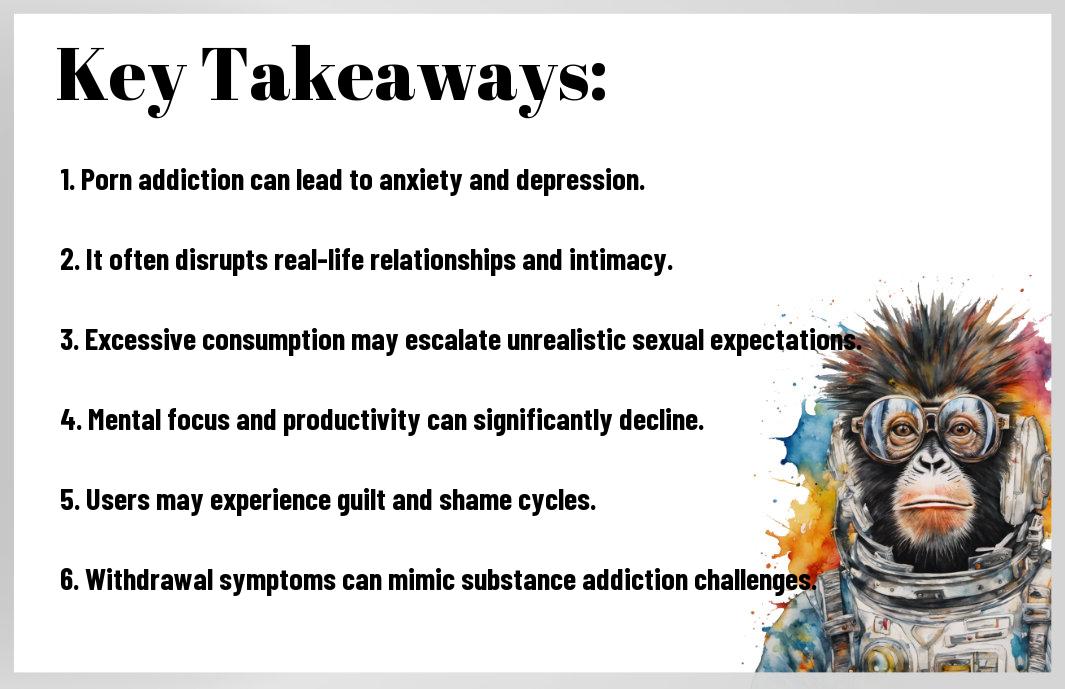
Key Takeaways:
- Overbearing porn addiction can lead to increased anxiety and depression, often stemming from feelings of guilt or shame associated with excessive consumption.
- Individuals may experience diminished self-esteem and self-worth due to unrealistic comparisons with on-screen portrayals of bodies and relationships.
- Excessive porn use may negatively impact interpersonal relationships, contributing to social isolation and difficulty in forming genuine connections.
- Desensitization to sexual stimuli can occur, resulting in decreased sexual arousal and satisfaction with real-life partners.
- Both cognitive and emotional aspects of mental health can suffer, with individuals developing impaired focus, memory issues, and emotional regulation problems.
- Withdrawal symptoms, similar to those seen in substance addiction, can include irritability and restlessness when trying to reduce or stop porn consumption.
- Seeking therapy or support groups can be beneficial for overcoming porn addiction and improving overall mental health and well-being.
Understanding Porn Addiction
While society often views pornography as a normal part of life, you might not recognize when this behavior crosses into addiction. Porn addiction can lead to compulsive use, disregarding the negative impact it has on your life and mental health. This issue extends beyond mere consumption; it can affect your relationships, work, and overall well-being, making it imperative to understand its implications.
Definition and Scope
Along with the definition of pornography, it’s important to understand that porn addiction refers to a compulsive pattern of consuming sexual imagery, often characterized by an inability to reduce its frequency or control your urges. This behavior can lead to significant impairment in various areas of your life, indicating a deeper psychological issue.
Signs and Symptoms
Against the backdrop of normal sexual curiosity, signs of porn addiction may include compulsive use despite negative consequences, persistent cravings, and avoidance of real-life intimacy. These symptoms can create a cycle where you feel guilt or shame yet continue to seek out pornography as a coping mechanism.
It can be challenging to identify the signs and symptoms of porn addiction within yourself. You may feel an overwhelming urge to watch porn, often finding yourself using it to escape stress or anxiety. You might also notice a decline in sexual desire for partners, or feel compelled to hide your usage. If you experience feelings of shame, isolation, or a loss of interest in hobbies, these factors can indicate that your porn consumption has shifted from a casual behavior to an addiction that affects your mental health.
Psychological Effects of Porn Addiction
Assuming you are aware of the growing concerns surrounding porn addiction, it’s vital to understand its psychological effects. Over time, this addiction can distort your perception of intimacy and relationships, leading to feelings of isolation and disconnection from reality. Unhealthy habits may develop, negatively impacting your social interactions and overall mental well-being. As you become more reliant on porn, your ability to engage in meaningful connections may diminish, further exacerbating emotional struggles and creating a vicious cycle that’s difficult to escape.
Anxiety and Depression
Effects of porn addiction often manifest as heightened levels of anxiety and depression. You might experience increased feelings of shame, guilt, or inadequacy related to your consumption habits. This emotional turmoil can lead to withdrawal from social activities, making it challenging to form healthy relationships and cope with life’s demands. As your addiction deepens, these feelings can spiral, leading to a significant impact on your mental health.
Impact on Self-esteem
Beside the emotional distress, porn addiction can significantly impact your self-esteem. It can create unrealistic expectations about sexual experiences and body image, causing you to compare yourself negatively to what you see on screen. This comparison may lead you to feel inferior, undermining your confidence in both intimate and non-intimate interactions.
At the core of low self-esteem linked to porn addiction are the unrealistic portrayals of intimacy and attraction that you consume. Regularly viewing such content can lead to dissatisfaction with your own body and sexual performance, leaving you vulnerable to self-doubt. This unhealthy cycle can further isolate you, as feelings of inadequacy build walls between you and others, hindering genuine connections and the development of a positive self-image.

Behavioral Consequences
Despite the immediate pleasure that porn may provide, overbearing addiction can lead to significant behavioral consequences. You might notice that your daily routines become increasingly centered around consuming pornographic content, affecting your productivity and engagement in various aspects of life. This obsession can disrupt your ability to enjoy genuine tactile experiences and relationships, leading to a cycle of dependency that is hard to break.
Changes in Relationships
Across various aspects of your life, porn addiction can dramatically shift how you interact with others. You may find yourself withdrawing from intimate relationships or struggling to build meaningful connections. The unrealistic standards and expectations set by porn can distort your perception of intimacy and compromise your ability to bask in genuine emotional closeness.
Compulsive Behaviors
Among those affected by porn addiction, compulsive behaviors often emerge as a primary concern. You might find yourself engaging in repetitive actions, whether it’s constantly seeking pornographic material or obsessively thinking about it throughout your day. This compulsivity can intrude on your time, affecting work performance and social interactions, which may leave you feeling isolated and anxious.
Understanding the nature of these compulsive behaviors can help you recognize how they captivate your daily life. You may start to notice that porn consumption becomes a coping mechanism for stress or anxiety, leading to a vicious cycle. As your reliance on this form of escapism grows, your ability to face real-life challenges diminishes, which could ultimately hinder your personal development and emotional well-being. Acknowledging these patterns is the first step toward regaining control and restoring balance in your life.

Neurobiological Impacts
Now, it’s important to understand how overbearing porn addiction impacts your brain’s neurobiology, leading to a cascade of mental health challenges. Regular engagement with pornography can alter the neural pathways in your brain, influencing not just your physical brain structure, but also how you perceive pleasure and intimacy in real life.
Brain Changes
With frequent exposure to explicit content, your brain can undergo significant changes, including a reduction in gray matter volume in relevant areas. This reduction can affect your decision-making processes, impulse control, and overall emotional well-being, making it challenging to relate to real-life experiences.
Dopamine and Reward System
One of the most profound neurobiological effects of porn addiction relates to your brain’s dopamine system, which is deeply involved in the reward circuitry. The heightened release of dopamine with porn consumption can lead to desensitization, making it harder for you to find pleasure in everyday activities, ultimately affecting your mood and mental health.
At this point, your brain may come to rely on the intense stimulation from pornography for dopamine release, which can interfere with your sleep, motivation, and ability to experience joy in real-life situations. This dependency can lead to a cycle of seeking out more extreme content to achieve the same thrill, further exacerbating mental health issues such as anxiety and depression. Ultimately, a distorted reward system can leave you feeling unfulfilled and disconnected from meaningful relationships.

Coping Mechanisms and Strategies
Once again, it’s important to acknowledge that overcoming porn addiction requires a multifaceted approach. You can implement coping mechanisms such as mindfulness practices, exercise, and engaging in hobbies to divert your focus. Establishing a structured daily routine and setting achievable goals can also foster a healthier mindset. Additionally, self-reflection through journaling can help you understand your triggers and emotional responses more clearly, encouraging you to make informed decisions about your habits.
Therapy Options
Strategies for addressing porn addiction often include professional therapy. Consulting a mental health professional who specializes in addiction can provide you with tailored support and practical tools. Cognitive Behavioral Therapy (CBT) is particularly effective in reshaping thought patterns and behaviors surrounding your addiction. Engaging in therapy sessions can create a safe space for you to explore underlying issues, helping you to develop healthier coping mechanisms.
Support Groups
Along with therapy, participating in support groups can greatly enhance your recovery journey. These groups provide a sense of community and shared understanding, allowing you to connect with others who face similar challenges. Hearing various perspectives and experiences can offer valuable insights, making you feel less isolated in your struggles. Furthermore, you can share your own journey, which may emphasize accountability and reinforce your commitment to overcoming addiction.
The benefits of support groups extend beyond shared experiences; they create a network for ongoing encouragement and motivation. Regular participation helps you build relationships with individuals who truly understand what you’re going through. These interactions can foster a sense of belonging and reinforce your commitment to recovery. Moreover, learning from others’ successes and setbacks can equip you with new strategies for managing your habits, ultimately enhancing your resilience in the face of challenges.
Prevention and Education
After understanding the impacts of overbearing porn addiction, taking proactive steps towards prevention and education becomes important. By fostering awareness, promoting healthy habits, and creating supportive environments, you can combat the adverse effects of pornography on mental health. Encouraging open discussions about sexual health can empower you to make informed decisions, leading to healthier relationships and well-being.
Awareness Programs
The implementation of awareness programs can significantly aid in educating individuals about the risks associated with porn addiction. These programs can provide you with valuable resources, guidance, and support, fostering a better understanding of how pornography can affect your mental health and relationships.
Healthy Sexual Education
Sexual education plays a vital role in shaping your views and understanding of intimacy and relationships. It equips you with knowledge about sexual health, consent, and emotional connection, steering you away from unrealistic expectations often perpetuated by pornography. By focusing on healthy sexual education, you learn to appreciate authentic connections rather than purely physical encounters.
Awareness of healthy sexual education encourages a comprehensive understanding of sexuality that extends beyond mere sexual mechanics. It involves discussions about consent, respect, and emotional intelligence, helping you form well-rounded perspectives on relationships. By learning to prioritize emotional connection and communication, you can cultivate healthier interactions that contribute positively to your mental health.
Conclusion
Following this, it’s clear that overbearing porn addiction can significantly impact your mental health by fostering feelings of isolation, anxiety, and diminished self-esteem. It may lead to unrealistic expectations about relationships and intimacy, making genuine connections more challenging. Acknowledging the effects and seeking help can pave the way for improved mental well-being. Understanding your relationship with pornography is imperative in reclaiming control over your life and enhancing overall mental health.
FAQ
Q: What are the signs of porn addiction?
A: Signs of porn addiction may include spending excessive amounts of time viewing pornographic material, prioritizing porn over personal relationships, responsibilities, or hobbies, experiencing cravings for porn, and feeling distressed or anxious when not viewing porn. Some individuals may also report using porn as a coping mechanism for stress, anxiety, or depression.
Q: How does porn addiction impact relationships?
A: Porn addiction can lead to decreased intimacy and emotional connection with a partner. Individuals may find themselves less satisfied with their real-life sexual experiences or may develop unrealistic expectations about sex and relationships based on what they see in porn. This can create feelings of inadequacy or jealousy between partners and may result in conflicts or misunderstandings.
Q: Can porn addiction lead to depression or anxiety?
A: Yes, studies indicate that individuals struggling with porn addiction may experience increased levels of anxiety and depression. Feelings of guilt, shame, or isolation often accompany the addiction, which can exacerbate pre-existing mental health conditions. Moreover, the compulsive nature of the addiction can create a cycle of negative emotions that further deteriorates one’s mental well-being.
Q: What are the long-term effects of porn addiction on mental health?
A: Long-term exposure to porn can alter brain chemistry and affect how individuals respond to sexual stimuli, leading to potential issues such as sexual dysfunction. Additionally, individuals may experience chronic anxiety, depression, reduced motivation, and difficulties in social situations. Over time, these factors can significantly affect one’s quality of life and overall mental health.
Q: What steps can be taken to address porn addiction and improve mental health?
A: Addressing porn addiction may involve several approaches, including acknowledging the problem, seeking professional support through therapy or counseling, exploring support groups, and developing healthier coping mechanisms. Engaging in open communication with partners can also help rebuild trust and intimacy. Mindfulness practices and physical activities can assist in reducing cravings and improving overall mental health.


