
Porn can become more than just a casual habit; it can transform into an overwhelming addiction impacting your life in various ways. If you find yourself questioning your relationship with porn, it’s vital to recognize the signs that may indicate an unhealthy dependence. Read more about porn addiction.
In this post, we’ll explore three shocking indicators that may suggest you’re struggling with porn addiction, helping you gain clarity on your situation and take the necessary steps towards healthier habits.
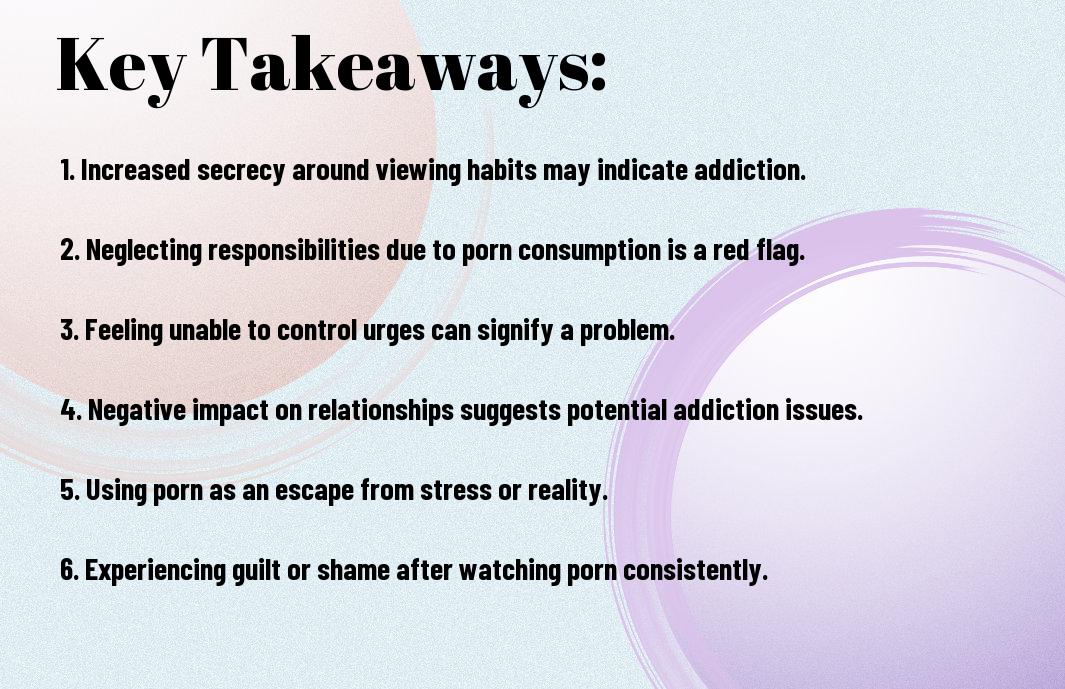
Key Takeaways:
- Evaluate how frequently you consume pornographic material and its impact on daily activities.
- Consider if your use of porn has led to negative feelings such as guilt, shame, or anxiety.
- Notice if you’ve tried to cut back on your porn consumption but found it challenging to do so.
- Reflect on whether your pornography use interferes with personal relationships or social interactions.
- Assess if you seek out more extreme content over time to achieve the same level of satisfaction.
- Be aware of any compulsive behaviors surrounding porn, such as using it as a coping mechanism for stress or boredom.
- Consider seeking professional help if you identify with these indicators and it impacts your quality of life.
 Understanding porn addiction early matters.
 The porn addiction can build up quickly.
Defining Porn Addiction
Before you can identify a potential porn addiction, it’s important to understand what it entails. Porn addiction is characterized by compulsive behavior that interferes with your daily life, relationships, and overall well-being. Research has highlighted various Associations with indicators of compulsive sexual behaviors, suggesting that this issue often stems from deeper psychological factors. Understanding these complexities can help you assess your situation more accurately.
Understanding Compulsive Behavior
After realizing the potential impact of porn on your life, recognizing compulsive behaviors is necessary. Compulsivity often manifests as an uncontrollable urge to engage with porn, even when it disrupts your daily activities or relationships.
You may find yourself spending excessive amounts of time consuming pornographic material, leading to feelings of shame or frustration afterward. Identifying these patterns can be the first step toward addressing your behavior. Spotting porn addiction fast helps recovery.
The Spectrum of Addiction
Below the surface, porn addiction exists on a spectrum ranging from mild to severe compulsivity. This continuum illustrates how a seemingly harmless habit can develop into a more serious issue over time.
You might initially consume porn for entertainment, but as it escalates, the compulsivity can take hold, impacting many areas of your life. The difference in severity can hinge on various factors including personal circumstances, psychological health, and how intertwined porn consumption is with your identity.
Hence, it’s vital to recognize where you fall on this spectrum. Understanding your relationship with porn can inform your choices and drive positive change.
Whether it’s a casual habit or an overwhelming compulsion, acknowledging your patterns can empower you to seek help or make adjustments. Clarity about your situation is the first step toward reclaiming control over your life and enhancing your well-being. Many miss the porn addiction until severe.
Shocking Indicator #1: Loss of Control
It can be alarming to find that you have lost control over your porn consumption. If you notice that you’re unable to reduce or stop your viewing habits despite wanting to, this may point toward a deeper addiction issue. You might want to explore the recovery process related to sexual betrayal, such as in How Long Does It Take a Couple to Recover from Sexual …, as it can offer insight into the emotional complexities involved. Facing porn addiction honestly is the first step.
Inability to Limit Use
To gain clarity about your consumption patterns, assess how often you attempt to limit or cut back your porn use but find yourself failing repeatedly. This inability to manage your viewing can create emotional distress and impact areas of your life, from relationships to personal well-being. Understanding porn addiction early matters.
Escalation of Consumption
An increase in your porn consumption is another sign of potential addiction. You may realize that what once satisfied you no longer does, leading you to seek out more extreme or varied content to achieve the same thrill.
But this continuous escalation doesn’t just reflect a shift in your preferences; it also indicates changing neurochemical responses.
As your brain adapts to higher levels of stimulation, what once felt pleasurable may no longer suffice, driving you further into compulsive behaviors. Being aware of this pattern is vital in recognizing the impact that such activities can have on your mental health and relationships.

Shocking Indicator #2: Neglecting Responsibilities
For many individuals struggling with porn addiction, neglecting responsibilities becomes a prominent sign. You may find yourself skipping important tasks at work, avoiding social obligations, or failing to meet personal commitments. Such neglect can lead to negative consequences in both your professional and personal life, impacting your overall well-being.
Impact on Work and Relationships
For instance, if you notice a decline in your work performance or increasingly miss deadlines, this may signal an unhealthy attachment to porn. Your relationships could also deteriorate, as you may prioritize viewing porn over spending time with loved ones, leading to feelings of isolation and disconnection.
Diminished Interest in Other Activities
Along with work and relationships, a significant sign of porn addiction is a reduced interest in activities that once brought you joy. You may start to lose enthusiasm for hobbies, exercise, or even socializing with friends, as your focus shifts entirely to consuming pornographic material.
To assess whether this diminished interest is affecting your life, consider how often you engage in activities that used to excite you.
If you find yourself preferring solitude in front of a screen rather than exploring your passions or enjoying time with others, it’s time to reflect on your habits. Recognizing this shift can be a vital step toward reclaiming a balanced life and re-engaging with the world around you.

Shocking Indicator #3: Emotional Distress
Keep in mind that emotional distress can be a significant indicator of porn addiction. If you notice that your mood often fluctuates, or you experience heightened anxiety or feelings of sadness, it may relate to your consumption of pornography. Acknowledging these emotions is imperative in understanding the impact that your habits may have on your overall well-being.
Feelings of Guilt or Shame
After engaging with pornography, you may find yourself grappling with intense feelings of guilt or shame. These emotions can stem from a conflict between your values and your actions, leading to distress. If you frequently experience these feelings, it’s important to assess how your habits affect your self-esteem and sense of self-worth.
Anxiety and Depression Symptoms
With repeated engagement with pornography, you might notice symptoms of anxiety and depression emerging in your daily life. You may feel increasingly isolated, experience panic attacks, or have difficulty concentrating. These symptoms can have a profound impact on your relationships and overall life satisfaction.
Plus, it’s imperative to explore how anxiety and depression can manifest in conjunction with porn consumption. You might find yourself avoiding social interactions, feeling hopeless, or even experiencing physical symptoms such as restlessness. Recognizing the connection between your emotional state and your habits can provide you with clarity and motivation to seek help and make positive changes.
Seeking Help for Porn Addiction
Your journey toward overcoming porn addiction can be daunting, but you’re not alone. Seeking help is a significant first step and can lead to a healthier relationship with yourself and your sexuality. With the right support and resources, you can regain control over your habits and foster a more fulfilling life.
Professional Therapy Options
Addiction treatment often involves working with a qualified mental health professional who specializes in behavioral addictions. Therapies such as cognitive-behavioral therapy (CBT) can help you identify and change problematic thought patterns. A therapist can provide you with strategies to manage triggers and develop healthier coping mechanisms, guiding you toward long-term recovery.
Support Groups and Resources
Support from others going through similar experiences can greatly enhance your recovery process. Connecting with individuals who understand your struggles can provide encouragement and accountability. Support groups offer a safe space to share your experiences and learn from others’ journeys toward healing.
Resources like online forums, local meetings, and dedicated apps can help you stay connected with others and gain valuable insights. Many organizations offer anonymous support services, allowing you to seek guidance at your own pace. By engaging with support groups, you can foster a sense of community and empowerment that is vital for overcoming addiction.
To wrap up
With these considerations, you can better understand whether you might be facing a porn addiction. Reflecting on the three indicators can provide clarity regarding your relationship with pornography and its impact on your life.
If you find that your consumption negatively affects your relationships, personal goals, or well-being, it may be time to reassess your habits. Seeking support and resources can be a constructive step towards achieving a healthier balance.
FAQ
Q: What are the main indicators that I might have a porn addiction?
A: There are several key indicators that may suggest you have a porn addiction. First, you may find that you spend excessive amounts of time viewing porn, to the detriment of other activities in your life.
Second, you might notice that you require increasingly extreme or varied types of porn to achieve the same level of satisfaction. Lastly, feelings of guilt or shame after viewing porn can serve as a warning sign that your usage may be unhealthy.
Q: How can I tell if my porn usage is excessive?
A: Excessive porn usage can be identified when it interferes with your daily responsibilities, whether at work, school, or in relationships. If you find yourself prioritizing porn over important tasks or social interactions, and if you feel compelled to engage with it even when you don’t feel like it, these are strong indicators that your consumption may be excessive.
Q: Is feeling guilt a common experience for those with porn addiction?
A: Yes, many people experiencing porn addiction often report feelings of guilt or shame after viewing porn. This emotional response can stem from personal beliefs, societal norms, or the impact that porn has on their life and relationships. If you frequently feel this way, it may indicate that your viewing habits are not aligning with your values.
Q: Can I still enjoy porn without being addicted?
A: It is possible to enjoy porn without it becoming an addiction. The key difference lies in how it affects your life. If porn is a part of your sexual expression and does not interfere with your daily responsibilities, relationships, or well-being, then it may not be an addiction.
Paying attention to how you feel before, during, and after viewing can provide important insights into your relationship with porn.
Q: What should I do if I recognize signs of addiction?
A: If you suspect you may have a porn addiction, consider seeking support from a therapist or counselor who specializes in sexual health. They can provide guidance and strategies for managing your relationship with porn. Additionally, joining support groups or communities where you can share experiences and learn from others can be beneficial in your journey towards healthier habits.
Q: Are there physical indicators of porn addiction?
A: While porn addiction primarily has psychological and behavioral indicators, some physical signs may include changes in sexual function or a diminished interest in real-life intimacy. Those experiencing addiction may find it increasingly difficult to become aroused without the aid of porn, or they may struggle with the development of sexual relationships outside of their viewing habits.
Q: How does porn addiction impact relationships?
A: Porn addiction can have a significant impact on relationships. It may lead to unrealistic expectations about sex and intimacy, decreased sexual attraction to partners, and issues of trust and communication.
Partners may feel neglected or inadequate if they perceive that porn is prioritized over the relationship. Open discussions about porn usage and its effects can help address concerns and rebuild trust between partners.