Tag: myths

  • Is Porn Addiction Real? Debunking 7 Common Myths (Science-Backed)

    Is Porn Addiction Real? Debunking 7 Common Myths (Science-Backed)

    Quick Answer: Is Porn Addiction Real

    Is Porn Addiction Real? Yes – is porn addiction real, and the research backs it up. Let’s debunk the 7 most common myths so you can answer ‘is porn addiction real‘ honestly for yourself or someone you care about.

    • Myth 1 about ‘is porn addiction real‘ and what the data shows.
    • Myth 2 about ‘is porn addiction real‘ and the neuroscience.
    • Myth 3 about ‘is porn addiction real‘ and the DSM criteria.

    See also: signs of porn addiction.

    There’s growing confusion about whether porn addiction is real, but science offers clarity. You’re likely exposed to misleading claims that exaggerate harm or deny any risk.

    This post corrects dangerous myths with evidence, helping you understand what research actually shows about behavior, brain response, and well-being.

    Is Porn Addiction Real illustration

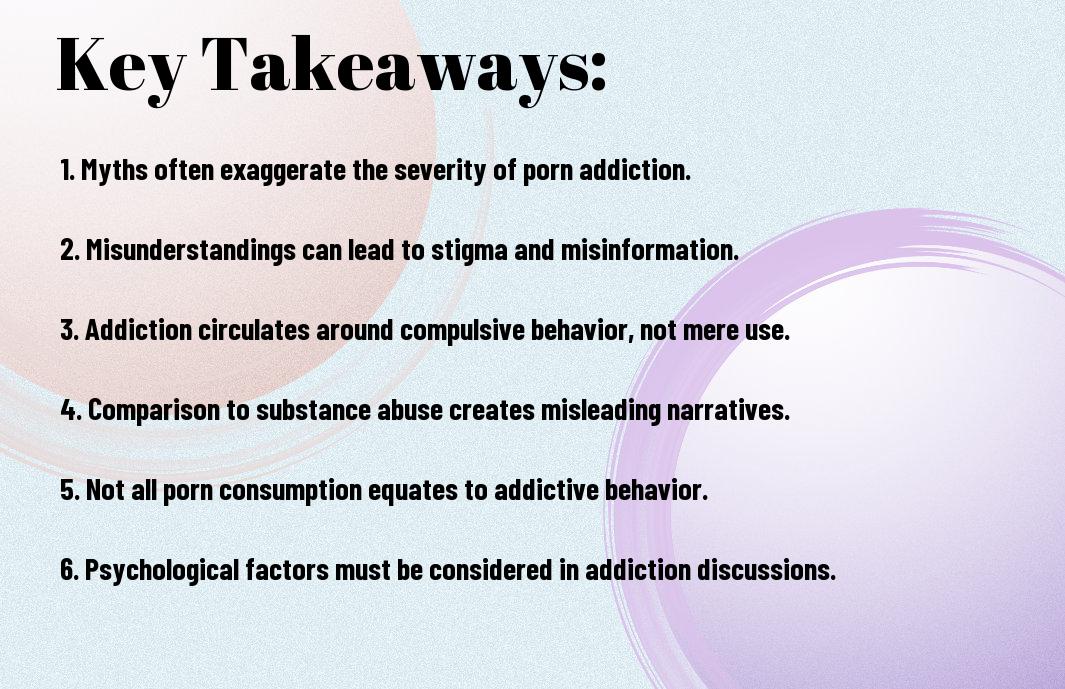
    Is Porn Addiction Real: Key Takeaways:

    • Porn addiction is not officially recognized as a mental health disorder in major diagnostic manuals like the DSM-5 or ICD-11, due to insufficient scientific evidence linking porn use to addictive behaviors in the same way as substance addictions.
    • Brain responses to porn resemble those seen with other pleasurable activities, such as eating or watching exciting videos, but these patterns alone do not confirm addiction-many everyday experiences activate similar neural pathways.
    • Feelings of guilt, anxiety, or distress about porn use are often tied to personal, cultural, or religious beliefs rather than the behavior itself, and these emotions can be mistaken for symptoms of addiction.
    • Some people report compulsive sexual behaviors involving porn, but experts argue these cases are better understood as symptoms of underlying issues like depression, OCD, or relationship difficulties, rather than a standalone porn addiction.
    • Abstinence-based treatments for porn use lack strong scientific support; therapies focusing on reducing shame, improving sexual literacy, and addressing root psychological factors show more promise in helping individuals feel more in control.

    Is Porn Addiction Real: The Dopamine Narrative: Why the Vending Machine Metaphor Fails

    Dopamine Isn’t a Reward Chemical

    Dopamine doesn’t signal pleasure the way most pop-science explanations claim. It’s more accurately a signal for motivation and attention, not the “feel-good” hit people assume.

    When you watch porn, dopamine surges not because you’re enjoying it, but because your brain is flagging something it perceives as novel or potentially rewarding. This distinction matters-your brain isn’t addicted to the pleasure; it’s chasing the anticipation.

    Reducing this process to a simple “dopamine rush” oversimplifies a complex system and misleads people about how desire and habit actually work.

    The Vending Machine Analogy Misleads

    You’ve probably heard the comparison: porn use is like feeding coins into a vending machine, each time getting a dopamine “snack.” This metaphor suggests a predictable, mechanical response that doesn’t reflect real brain function.

    In reality, your brain doesn’t dispense dopamine like a machine dispensing chips. The release depends on context, expectation, emotional state, and prior experience.

    Treating it like a simple input-output system ignores how learning, memory, and emotion shape your responses over time.

    This oversimplification fuels fear without offering real insight.

    Not All Dopamine Pathways Are the Same

    Your brain has multiple dopamine systems, and they don’t all behave the same way.

    The circuits involved in compulsive porn use differ from those activated by drugs like cocaine or heroin. Studies show that while porn may activate reward pathways, it doesn’t hijack them in the same neurotoxic way as substances.

    This doesn’t mean problematic use doesn’t exist-but it does mean equating it with chemical addiction distorts the science.

    You’re not “rewiring” your brain in a permanent, damaging way with every session.

    Habit, Not Hijack, Is the Real Mechanism

    What you’re experiencing may feel compulsive, but that doesn’t mean your brain has been taken over. Most persistent porn use fits better within the framework of habitual behavior than true addiction.

    Habits form through repetition and context, not chemical dependency. When you find yourself returning to porn despite wanting to stop, it’s likely due to ingrained cues-like stress, boredom, or late-night routines-not an uncontrollable neurological craving.

    Recognizing this gives you more agency than the addiction model often allows.

    Believing the Myth Can Be Harmful

    Telling yourself you’re “addicted” because of dopamine can become a self-fulfilling prophecy. This belief may reduce your sense of control and increase shame, making change feel impossible.

    Research shows that people who view their porn use as an addiction report higher distress-even when their actual usage isn’t extreme. You don’t need to pathologize normal sexual curiosity or habit formation.

    A more accurate understanding helps you address the behavior without unnecessary guilt or fear.

    The Tolerance Trap: Distinguishing Habituation from Escalation

    What Happens When Your Brain Gets Used to Stimulation

    You may notice that over time, the same content doesn’t spark the same reaction it once did.

    This is habituation-a normal brain process where repeated exposure reduces your emotional or physiological response. Your brain adapts to frequent stimuli, not because something is broken, but because it’s working as designed.

    This doesn’t mean you’re addicted; it means your neural circuits are recalibrating based on experience. Many people misinterpret this shift as a sign of pathology when it’s actually part of how learning and regulation function.

    When Seeking More Crosses Into Risky Territory

    Escalation occurs when you actively pursue more extreme or novel content to achieve the same level of arousal. Unlike habituation, which is passive, escalation involves behavioral pursuit that can disrupt your values, relationships, or daily functioning.

    This shift isn’t inevitable, but when it happens, it often reflects a deeper struggle with impulse control or emotional regulation.

    If you find yourself going further than you intended-watching content that conflicts with your beliefs or spending increasing amounts of time disengaged from real-life connections-this pattern may signal a problem worth addressing.

    The Fine Line Between Preference and Compulsion

    Your changing tastes don’t automatically mean you’re in trouble. People naturally evolve in what they find stimulating, and variety is common in sexual expression.

    The red flag appears when choice gives way to compulsion-when you feel driven rather than curious, or when stopping feels impossible despite negative consequences.

    Science shows that compulsive behaviors activate brain regions linked to craving and loss of control, similar to other behavioral addictions. Recognizing this distinction helps you assess whether your habits are adaptive or harmful.

    How to Respond Without Panic or Denial

    Awareness is your most powerful tool. If you’re concerned about escalating use, the first step is honest self-reflection, not shame. Ask yourself: Is this enhancing my life, or replacing it? Patterns matter more than isolated acts.

    Occasional high consumption isn’t proof of addiction, but consistent interference with work, intimacy, or mental health is a signal to act.

    Evidence-based approaches like cognitive behavioral therapy have shown effectiveness in helping people regain balance-without moralizing or fear-based messaging.

    Relationship Dynamics: The Scapegoat in the Bedroom

    How Blame Distorts Intimacy

    You’ve likely heard a partner say, “If you didn’t watch porn, we’d be closer.” This statement shifts complex emotional or sexual disconnect onto one behavior, turning porn use into a convenient scapegoat for deeper relational issues.

    When communication breaks down or emotional needs go unmet, it’s easier to point at a screen than confront unspoken resentments or mismatched desires.

    Science shows that relationship satisfaction depends on emotional attunement, trust, and mutual effort-factors rarely resolved by simply removing porn from the equation.

    The Myth of Instant Connection

    Some believe that eliminating porn will magically restore passion or reignite intimacy. This expectation sets couples up for disappointment. Desire is not restored by subtraction alone; it grows through shared vulnerability, curiosity, and consistent emotional investment.

    When one partner assumes that stopping porn will automatically lead to better sex, they may overlook their own role in creating a safe, engaging sexual environment. Real connection requires presence, not just abstinence.

    Projection and Avoidance Patterns

    Your discomfort with your partner’s porn use might actually reflect your own insecurities or unmet needs. It’s common to project feelings of inadequacy onto their behavior, especially if you’re struggling with body image, performance anxiety, or fear of comparison.

    Research indicates that individuals who feel less secure in their relationships are more likely to view porn use as a betrayal-even when no emotional or physical infidelity exists. Recognizing this pattern is the first step toward honest dialogue, not accusation.

    Shared Responsibility in Sexual Fulfillment

    Sexual satisfaction in a relationship is not one person’s duty to fix. If you’re framing your partner’s porn use as the sole reason for sexual dissatisfaction, you may be avoiding shared responsibility for co-creating a fulfilling intimate life.

    Studies consistently show that couples who communicate openly about desires, experiment together, and prioritize emotional safety report higher sexual satisfaction-regardless of whether porn is part of their dynamic. Blame shuts down conversation; curiosity opens it.

    Physical Performance: When Anxiety Masquerades as Biology

    The Hidden Role of Performance Anxiety

    Many men report erectile difficulties or delayed ejaculation while consuming pornography and assume the issue is purely physical. What often goes unnoticed is that anxiety-not biology-is the primary driver behind these symptoms. When you expect peak performance every time, especially in high-stakes or novel sexual situations, your nervous system can respond with tension instead of arousal.

    This stress response mimics low testosterone or neurological dysfunction, but it’s rooted in psychological pressure, not physical deficiency.

    How Porn Consumption Amplifies the Pressure

    Your brain learns to associate arousal with specific visual triggers, often unrealistic or highly stimulating content.

    Over time, real-life intimacy may feel underwhelming by comparison. This mismatch doesn’t mean your body has failed-it means your arousal system has adapted to an artificial standard. When you can’t perform as expected with a partner, shame and fear of failure take over, creating a feedback loop that worsens the problem.

    The more you worry, the harder it becomes to relax into pleasure.

    Breaking the Cycle with Awareness and Practice

    Performance issues linked to porn use are often reversible once you understand their psychological origin. Re-training your brain to respond to real intimacy-through mindfulness, sensate focus exercises, and open communication-can restore natural sexual function. You don’t need medication or extreme abstinence; you need accurate information and compassionate self-observation.

    Recognizing that anxiety, not damage, is at the core allows you to address the real problem without unnecessary fear.

    The Drug Comparison: The Flaw in the Cocaine Analogy

    Why the Brain Scan Argument Falls Short

    Brain activation patterns during porn use often get compared to those seen in cocaine addiction, but this comparison oversimplifies complex neuroscience.

    When you see headlines claiming “porn lights up the brain like drugs,” it sounds alarming-yet the same brain regions activate during many rewarding behaviors, from eating chocolate to listening to music.

    Activation alone doesn’t indicate addiction; it shows engagement with a pleasurable stimulus, which is normal. The brain’s reward system evolved to respond to natural rewards, not just substances.

    Interpreting this activity as proof of addiction misrepresents how the brain functions and can lead to unnecessary fear.

    Biological Similarities vs. Clinical Reality

    Dopamine release occurs during both drug use and sexual arousal, but the magnitude, duration, and consequences differ significantly. Cocaine floods the brain with dopamine in an artificial, sustained way that disrupts normal regulation.

    Natural behaviors like watching porn cause smaller, shorter dopamine spikes that don’t chemically alter brain circuitry in the same manner. You may feel preoccupied or compulsive at times, but that doesn’t mean your brain is damaged.

    The analogy collapses under scrutiny when clinical markers of addiction-such as tolerance, withdrawal, and functional impairment-are applied rigorously.

    Claim Scientific Reality
    Porn use activates the same brain areas as cocaine. Yes, but so do food, music, and social interaction-activation alone doesn’t equal addiction.
    Dopamine response proves porn is chemically addictive. Dopamine is involved in all motivation and reward, not just substance abuse.
    People experience withdrawal when stopping porn. No consistent clinical evidence supports physical withdrawal symptoms like those in drug dependence.
    Brain structure changes prove addiction. Neuroplasticity occurs with any repeated behavior-this isn’t unique to pathology.
    Loss of control means addiction. Compulsive behavior can stem from anxiety, shame, or moral conflict-not necessarily addiction.

    What This Means for You

    You might feel out of control around porn, and that distress is real-but labeling it as a drug-like addiction may do more harm than good. Framing your experience through a substance abuse lens can increase shame and discourage self-efficacy.

    Research shows that people who believe they are “addicted” are less likely to recover, partly because the belief itself reduces perceived control. Instead, understanding your behavior in context-stress, loneliness, habit, or unmet needs-opens more effective paths to change.

    The brain is responsive, not broken.

    Moral Congruence: The Psychology of Self-Labeling

    How Beliefs Shape Identity

    You don’t just act on your values-you become them.

    When your behavior conflicts with deeply held moral beliefs, especially around sexuality, your mind searches for meaning. This internal clash often leads to self-labeling, where you attach identity terms like “addict” to explain actions that feel out of alignment. Research in moral psychology shows that people are more likely to adopt clinical labels when guilt, shame, or religious convictions amplify perceived wrongdoing.

    The label isn’t always rooted in clinical criteria-it’s often a psychological response to moral dissonance.

    The Power of Internal Narratives

    Your brain seeks consistency between who you are and what you do.

    When you view pornography as morally wrong, even occasional use can trigger cognitive dissonance. This discomfort pushes you to reframe the behavior as compulsive or uncontrollable, reinforcing the belief that you must be “addicted.” Studies using narrative analysis reveal that individuals who describe themselves as porn addicts often emphasize moral failure over behavioral patterns.

    Their stories focus less on frequency or withdrawal and more on betrayal of personal or religious ideals.

    Science vs.

    Self-Perception

    Neuroimaging and behavioral studies have not found consistent evidence that moral distress activates the same brain regions as substance dependence. While you may feel intense shame or loss of control, these emotions don’t equate to the neurobiological markers of addiction, such as tolerance or withdrawal. A 2021 meta-analysis showed that self-identified porn “addicts” reported higher levels of religiosity and internalized stigma-not higher usage rates than non-labeled peers.

    This suggests that moral congruence, not clinical pathology, often drives the addiction label.

    Reclaiming Agency Without Judgment

    You have the capacity to change behavior without pathologizing desire. Recognizing that moral discomfort doesn’t equal disease empowers you to address root beliefs rather than assume a fixed identity. Cognitive-behavioral approaches that explore values, rather than enforce abstinence, show better long-term outcomes for those distressed by porn use.

    By separating ethics from diagnosis, you regain agency-making intentional choices instead of reacting to shame.

    Conclusion

    Hence, the debate around porn addiction reflects deeper questions about behavior, brain response, and personal control.

    Science shows that while compulsive sexual behaviors exist, labeling them as “addiction” oversimplifies complex psychological patterns. You now understand that brain activation from porn resembles responses to natural rewards, not substances like drugs.

    Myths often exaggerate harm or imply universal risk, but research reveals individual differences matter most. You are capable of evaluating your habits with clarity and using evidence-not fear-to guide decisions about media consumption and mental well-being.

    Key Takeaways: Is Porn Addiction Real

    • Understand is porn addiction real — start with the clinical definition, not the internet one.
    • Spot is porn addiction real warning signs early before they escalate.
    • Address is porn addiction real with structured daily practice, not willpower alone.
    • Track is porn addiction real progress using weekly check-ins and small wins.
    • Sustain is porn addiction real recovery with habits, community, and accountability.

    Apply Is Porn Addiction Real to Your Recovery

    Put is porn addiction real into practice with these resources:

    For clinical context on is porn addiction real, see Psychology Today on sex addiction.

    FAQs: Is Porn Addiction Real

    Q: Is porn addiction recognized as a medical diagnosis?

    A: The World Health Organization (WHO) included compulsive sexual behavior disorder (CSBD) in the 11th edition of the International Classification of Diseases (ICD-11), which can include problematic pornography use.

    However, the American Psychiatric Association (APA) has not listed “porn addiction” as a diagnosable condition in the DSM-5. This difference reflects ongoing debate among experts.

    What is clear is that some people experience real distress and loss of control around porn use, even if the label “addiction” remains contested in clinical circles.

    Q: Does watching porn rewire the brain like drugs do?

    A: Brain imaging studies show that frequent porn use can lead to changes in brain activity, particularly in regions linked to reward and motivation. These patterns resemble those seen in substance use, but they are not identical.

    The brain adapts to repeated stimuli, whether it’s food, video games, or porn. This neuroplasticity doesn’t automatically mean addiction. The key difference lies in whether the behavior causes significant harm and persists despite negative consequences.

    For some individuals, these brain changes are linked to compulsive use, but for most, they reflect normal learning and habit formation.

    Q: Can someone be addicted to porn even if they don’t watch it every day?

    A: Yes. Frequency of use does not determine addiction. What matters is the impact on a person’s life. Someone might use porn infrequently but still feel intense shame, lose hours to planning or recovering from use, or repeatedly fail to cut back despite wanting to.

    Others may watch daily without any negative effects. The presence of distress, failed attempts to stop, and interference with relationships, work, or mental health are stronger indicators than how often someone watches.

    Q: Are the harms of porn addiction exaggerated by moral or religious beliefs?

    A: Some claims about porn’s dangers stem from cultural or religious concerns rather than scientific evidence.

    Studies show that moral disapproval strongly predicts whether someone labels their porn use as “addictive.” People who view porn as sinful are more likely to report symptoms of addiction, even when their usage levels are similar to others who don’t feel distressed.

    This doesn’t mean their suffering isn’t real, but it suggests that beliefs about porn can shape the experience of harm. Science focuses on measurable dysfunction, not moral judgments.

    Q: Can people recover from compulsive porn use without treatment?

    A: Many people reduce or stop problematic porn use on their own over time. Research on sexual behaviors shows high rates of natural remission, especially as people enter stable relationships or shift life priorities.

    For those who struggle, cognitive behavioral therapy (CBT), mindfulness, and addressing underlying issues like anxiety or loneliness can help.

    Recovery doesn’t always require abstinence; for many, the goal is developing a healthier relationship with sexuality and media use, not elimination.

    Clinical context: sex addiction research.

    Related reading

    Is Porn Addiction Real? Here Is What The Evidence Actually Says

    Short answer: yes. Long answer: it is more nuanced than the headlines suggest.

    If you ask “is porn addiction real,” the honest scientific answer is that compulsive sexual behaviour disorder (CSBD) is now a recognised condition in the World Health Organization’s ICD-11 diagnostic manual.

    That recognition matters. It tells us that a measurable cluster of people lose control over their porn use in a way that hurts their work, relationships, and mental health.

    So when someone asks is porn addiction real, the better question is: real for whom, and at what threshold?

    For roughly 3–8% of regular users, the pattern crosses into clinical territory: escalating use, failed attempts to stop, and significant distress. That is the line that separates a heavy habit from an addiction.

    You can read the WHO’s official position on the diagnosis in the ICD-11 entry for Compulsive Sexual Behaviour Disorder. It is the most authoritative source on whether porn addiction is real in a clinical sense.

    Quick Answers To “Is Porn Addiction Real” Follow-Ups

    Is porn addiction real or just a moral panic? Both can be true at once. The moral panic is overblown, but the clinical condition for the smaller subset is well-documented.

    How do I know if it is real for me? Use the three-part test: loss of control, continued use despite harm, and distress when you try to stop. If all three apply for six months or more, take it seriously.

    If that sounds familiar, our 30-day reset plan and brain neuroscience explainer are the two best places to start.
    Is Porn Addiction Real? Here Is What The Evidence Actually Says

    Short answer: yes. Long answer: it is more nuanced than the headlines suggest.

    If you ask is porn addiction real, the honest scientific answer is that compulsive sexual behaviour disorder is now a recognised condition in the World Health Organization ICD-11 diagnostic manual.

    That recognition matters. It tells us that a measurable cluster of people lose control over their porn use in a way that hurts work, relationships, and mental health.

    So when someone asks is porn addiction real, the better question is: real for whom, and at what threshold?

    For roughly 3 to 8 percent of regular users, the pattern crosses into clinical territory. Escalating use, failed attempts to stop, and significant distress separate a heavy habit from an addiction.

    You can read the official position on the diagnosis on the Psychology Today reference page on sex and porn addiction. It is one of the clearest summaries of whether porn addiction is real in a clinical sense.

    Quick Answers To Is Porn Addiction Real Follow-Ups

    Is porn addiction real or just a moral panic? Both can be true at once. The moral panic is overblown, but the clinical condition for the smaller subset is well documented.

    How do I know if it is real for me? Use the three-part test: loss of control, continued use despite harm, and distress when you try to stop. If all three apply for six months or more, take it seriously.

    If that sounds familiar, our 30-day reset plan and brain neuroscience explainer are the two best places to start.

  • 5 Common Myths About Porn Addiction (Debunked)

    5 Common Myths About Porn Addiction (Debunked)

    Start with our signs of porn addiction guide for background.

    Most myths about porn addiction mislead you about causes, severity, treatment, and recovery; this guide clarifies five common falsehoods so you can make informed decisions and seek appropriate support.

    Defining the Clinical Framework of Compulsive Sexual Behavior

    Distinguishing between high-frequency use and clinical addiction

    Clinical distinctions help you separate frequent sexual activity from the diagnostic criteria clinicians use to identify compulsive sexual behavior disorder (CSBD), focusing on impaired control, persistence despite harm, and functional impairment. You will look for patterns where urges dominate daily life and erode work, relationships, or safety, not merely frequent consensual encounters.

    Clinicians must also evaluate whether distress arises from moral conflict or genuine loss of control, because conflating the two leads to misdiagnosis.

    Patterns of behavior alone are insufficient to label someone as addicted; you should weigh frequency against consequences such as missed responsibilities, emotional withdrawal, or legal and financial fallout. You will assess failed attempts to reduce behavior, the intensity of preoccupation, and escalation over time, which differentiate high desire from compulsive processes.

    Collateral reports and objective markers of impairment strengthen diagnostic confidence.

    Assessment requires structured interviews, validated measures, and a careful review of comorbidities so you avoid pathologizing high libido or culturally normative practices. You should screen for mood disorders, substance use, trauma, and impulse-control problems that can mimic or exacerbate CSBD symptoms.

    Treatment decisions should follow from clear evidence of persistent impairment rather than transient distress or relationship conflict.

    The World Health Organization’s classification of CSBD

    WHO’s inclusion of Compulsive Sexual Behavior Disorder in ICD-11 frames CSBD as an impulse-control condition, which influences how you conceptualize diagnosis and therapeutic approaches. You should understand that the ICD criteria emphasize repetitive sexual behavior occurring over an extended period, enacted despite unsuccessful attempts to control it and producing significant distress or impairment.

    That framing guides clinicians toward interventions targeting self-regulation and impulse management rather than moralizing the behavior.

    This classification also requires you to distinguish clinical disorder from moral incongruence and cultural disapproval, which can produce distress without impaired control. You should employ the ICD criteria to evaluate whether reported suffering stems from internalized values or from a genuine loss of behavioral control.

    Careful differentiation reduces the risk of stigmatizing normative sexual expression.

    Classification debate means you must apply the WHO criteria with clinical nuance, integrating empirical evidence and patient context rather than relying solely on labels. You should consult cross-cultural data and emerging research to ensure diagnoses reflect persistent dysfunction and not situational or transient issues.

    Collaborative discussion with the patient about goals and values helps align diagnostic decisions with lived experience.

    Guidelines advise combining ICD-11 criteria with comprehensive assessment of comorbid psychiatric conditions, functional impact, and documented behavioral patterns before assigning a diagnosis; you should record previous attempts to change behavior, objective consequences, and response to any prior interventions.

    You will consider psychotherapy, medications, or integrated care based on severity and comorbidity while maintaining careful follow-up to monitor progress and minimize harm.

    Socializing a pomeranian with dogs and people

    Myth 1: Porn Addiction is Simply a Matter of High Libido

    The role of the brain’s reward system and dopamine spikes

    Your brain treats intense, novel sexual imagery as a powerful reward signal, releasing large surges of dopamine that reinforce the behavior more than raw sexual desire does. Repeated activation of that reward circuitry trains neural pathways to prioritize quick, high-intensity stimulation over slower, real-life intimacy, so what looks like increased libido is often a conditioned response to those biochemical spikes.

    You will find that the pattern resembles other compulsive behaviors: strong cue-reactivity, craving when exposed to triggers, and difficulty stopping despite negative consequences.

    Repeated exposure to extreme or novel content raises the threshold for what produces the same level of reward, so you chase greater stimulation rather than simply experiencing more sexual drive. Your decision-making centers can weaken relative to the habit circuitry, making it harder to choose alternative activities even when you want to.

    You may notice that ordinary sexual situations feel underwhelming, which reinforces the cycle and creates a feedback loop driven by conditioned dopamine responses rather than innate libido.

    Neuroadaptation reshapes how you respond to sexual cues, increasing compulsivity and reducing natural interest over time when the behavior is used repeatedly to achieve quick reward. You might feel compelled by images or certain online rituals in ways that your “sexual desire” label doesn’t explain, because the brain has learned to prioritize the cue-reward sequence.

    Treatment approaches that target these learned patterns, such as habit reversal and strengthening prefrontal control, address the underlying reward conditioning rather than treating the issue as mere high libido.

    Escapism and emotional regulation vs. sexual desire

    You often use porn to manage emotions-stress, boredom, loneliness-so the behavior functions as a coping tool rather than an expression of a heightened sex drive. When that becomes your default strategy, the behavior is more about achieving immediate relief and emotional numbness than pursuing intimate connection, and the frequency of use reflects coping needs.

    You may misread the intensity of urges as sexual hunger when they are actually conditioned responses to emotional cues.

    When emotional regulation drives consumption, the pattern shifts from seeking pleasure to seeking escape, and you will notice use spikes in response to negative moods or life pressures. You might rely on porn because it reliably delivers distraction and short-term calming, creating a learned association between feeling bad and turning to screens.

    You can begin to treat urges as signals of unmet emotional needs rather than proof of abnormal libido.

    Over time that coping loop can erode other strategies for managing emotions, making you more dependent on porn for relief and less able to tolerate discomfort without it. You may experience shame, reduced motivation for real-life relationships, and impaired functioning that further fuels the cycle, highlighting that the core issue is regulation, not simply sexual appetite.

    You benefit from addressing emotion skills to reduce reliance on porn as an escape.

    Clinical observations show that when you work on alternative emotion-regulation techniques-stress management, grounding, and seeking social support-you often see a reduction in compulsive use even without focusing solely on sexual desire.

    You can learn to identify triggers, practice healthier coping responses, and rebuild pleasure in everyday intimacy, which reframes the behavior from a supposed libido problem into a solvable pattern of emotional avoidance.

    Myth 2: It is Not a Scientifically Recognized Condition

    Observed neurological changes in the prefrontal cortex

    Researchers have identified structural and functional differences in the prefrontal cortex among people who describe compulsive pornography use, and you can see how those differences affect behavior. Imaging studies report reduced gray matter volume, altered white matter pathways, and weaker connectivity between prefrontal control regions and reward circuits, which map onto impaired impulse regulation and poor decision-making.

    Those findings align with how you experience urges overriding long-term goals, showing a brain-based pattern that merits clinical attention rather than dismissal as mere moral weakness.

    Neuroimaging during cue exposure reveals that you often show heightened activation in reward-related regions while exhibiting reduced prefrontal engagement that would normally inhibit impulsive actions. Task-based fMRI and resting-state studies demonstrate this imbalance, correlating with self-reported craving and difficulty stopping use despite negative consequences.

    The pattern resembles neural signatures found in other behavioral addictions and substance use disorders, which helps explain why treatment approaches targeting cognitive control and cue responses can change outcomes for you.

    Longitudinal evidence indicates that the observed prefrontal differences are not necessarily permanent, and you can see measurable neural adaptation with behavioral change and treatment. Cognitive behavioral interventions, abstinence periods, and targeted therapies have been associated with improved prefrontal functioning and reduced cue-reactivity in follow-up studies.

    Those plasticity findings support the idea that the condition is scientifically tractable and that interventions aimed at restoring regulatory control can produce real neurological and behavioral improvements for you.

    Habituation, tolerance, and the escalation of content

    Habituation explains why repeated exposure to similar sexual stimuli produces diminishing arousal for you, prompting a search for novelty to achieve the same effect. Neural reward pathways downregulate responses to repeated cues, so the initial material that once satisfied you no longer does and you feel compelled to browse more or different content.

    This process undercuts the notion that compulsive patterns are purely volitional choices and instead highlights a predictable, neurobehavioral response to repeated high-intensity stimulation.

    Tolerance develops as your subjective arousal requires increasingly extreme or novel content to recreate earlier levels of activation, and you may find that typical material no longer produces interest or satisfaction. That escalation can push you toward content that conflicts with your values or harms relationships, while simultaneously making it harder to stop because each step raises the internal threshold for arousal.

    Clinical parallels to tolerance in substance use disorders clarify why simple willpower often fails when underlying reward sensitivity has shifted.

    Escalation is accelerated by easy access and algorithmic recommendation systems that feed you progressively tailored material, shortening the time it takes to move from casual use to more intense consumption. Those platforms magnify habituation by continuously offering novel stimuli that bypass natural limits, which makes the behavioral cycle harder for you to interrupt.

    Understanding this dynamic explains why structural interventions-changes to environment, devices, and habits-are a central part of effective recovery strategies.

    Treatment options for addressing habituation and escalation focus on altering exposure patterns and rebuilding regulatory capacity so you can reduce cravings and regain control. Practical steps include setting firm limits on device use, deploying content filters or accountability software, practicing stimulus-control strategies, and engaging in therapies that teach coping skills and modify learned responses to cues.

    Combining behavioral tools with social support or counseling increases the likelihood that neural adaptation will reverse the tolerance process and restore balanced responses for you.

    Myth 3: Only Men Struggle with Compulsive Pornography Use

    Examining the rising statistics of female consumption

    Data from large surveys and traffic analytics show rising female engagement with online pornography over the past decade, particularly among younger age groups. You may assume historical numbers undercount women because many studies used male-centered samples or stigmatizing questions that suppress honest reporting.

    This trend appears across platforms and formats, with increases in casual viewing, subscription use, and private streaming that traditional monitoring misses.

    Surveys reveal different patterns of use: you may find episodic consumption tied to stress or relationship factors rather than constant daily browsing, and younger women report greater comfort using mobile apps. Clinical screening that assumes frequency equals severity can miss functional impairment you experience from secretive or compulsive cycles tied to mood regulation.

    Researchers are refining measures to capture context, shame, and co-occurring conditions so you can better identify women whose lives are harmed even if raw hours seem lower.

    Researchers also note that help-seeking pathways differ, so you might see women present for anxiety, depression, or relationship distress rather than explicit pornography complaints. Treatment outcomes can be comparable when interventions address underlying triggers, which shows you should avoid binary thinking about gender and addiction.

    As clinical awareness grows, screening should include gender-sensitive questions so you can detect compulsive use regardless of how someone labels their behavior.

    How gender-based stigma impacts reporting and recovery

    Stigma around female sexuality means you are less likely to disclose problematic consumption; shame and fear of judgment often lead to silence or denial. Service providers and peers may react with moralizing comments instead of clinical curiosity, which discourages you from seeking consistent support.

    Because reporting rates drop, public-health data underrepresents women, reinforcing the myth that only men struggle and limiting resources you might access.

    Cultural expectations about female sexual behavior shape how you interpret your own actions and how practitioners respond, with assumptions that women are “less sexual” or simply “experimenting.” These biases can delay diagnosis and lead you to ineffective referrals that ignore trauma histories or emotional regulation needs.

    Training providers to ask neutral, nonjudgmental questions would help you receive care that matches the problem rather than the stereotype.

    Treatment settings often skew male, which means you may encounter group modalities and language that don’t reflect your experience, making you less likely to engage fully. Confidentiality concerns and fear of social repercussion can further impede consistent attendance, so you need options like women-only groups or telehealth to feel safe.

    When programs adapt content and screening to account for gender-specific pathways, outcomes for you can improve.

    Practical steps you can take include seeking clinicians trained in sexual health and trauma-informed care, requesting gender-sensitive screening, and exploring anonymous digital support if in-person groups feel unsafe. You should insist on assessments that explore motivations, shame, and co-occurring symptoms rather than relying solely on consumption metrics.

    Providers should offer diverse recovery formats so you can find a pathway that aligns with your needs.

    Myth 4: Pornography is the Sole Root Cause of Relationship Issues

    You should view pornography as one thread in a larger tapestry rather than the single cause of relational breakdown; it often highlights existing fractures like unmet needs, secrecy, or emotional distance that were present beforehand.

    Many partners attribute every argument and disconnect to porn because it’s tangible and alarming, but that tendency can obscure patterns such as poor communication, mismatched expectations, unresolved grief, or unmanaged mental health challenges.

    Consider addressing behaviors and the underlying dynamics together: you can hold accountability for specific actions while also exploring the deeper emotional and practical factors that contributed to those choices.

    Identifying underlying communication and intimacy gaps

    When you assess what’s happening, focus on how you and your partner talk about desires, boundaries, and disappointments rather than only on what was viewed online; patterns of avoidance or escalation reveal much more.

    If you notice repeated cycles of blame, ask what conversations never happened and which needs went unspoken; tracking those moments gives you concrete targets for change you can work on together.

    Some practical steps include scheduling honest check-ins, using “I” statements to express hurt, and agreeing on small experiments to rebuild trust and closeness so intimacy can return gradually.

    The “scapegoat” effect in modern partnership conflicts

    Research shows that blaming a visible behavior like porn use can temporarily reduce tension by providing a clear target, but that relief is short-lived if underlying issues remain unaddressed.

    One common pattern is that the partner who feels hurt channels broader dissatisfaction into a single grievance, which freezes deeper conversations about compatibility, stress, or unmet emotional needs.

    Partners who act as if porn is the sole villain may avoid confronting their own contributions to relational strain, which prevents mutual responsibility and stalls real repair work.

    Treatment for the scapegoat dynamic often involves couple-based interventions where you learn to separate symptom management from systems work-setting boundaries while also rebuilding communication skills and addressing individual wounds through therapy.

    Myth 5: Willpower is the Only Tool Required for Recovery

    The necessity of professional therapeutic intervention

    Clinicians assess patterns you might miss, such as trauma links, mood disorders, and compulsive cycles, and they design treatment plans that go beyond simple resolve.

    You gain structured safety planning, medication referrals when indicated, and coordinated support that turns isolated effort into a managed process.

    Therapy provides evidence-based techniques to address triggers, distorted beliefs, and relapse pathways so you can build practical alternatives to impulsive use.

    You will receive measurable goals, homework, and accountability that change behavior over time rather than relying on fleeting determination.

    Studies show that outcomes improve when professional care addresses comorbid conditions and teaches coping skills instead of expecting willpower alone to suffice. You should view willpower as a component within a broader strategy that includes assessment, skilled intervention, and follow-up.

    Implementing cognitive behavioral strategies for long-term change

    Skills from cognitive behavioral therapy teach you to identify automatic thoughts and interrupt the cycle before behavior escalates, replacing reactive responses with planned actions.

    You will practice thought records, stimulus control, and graded exposure to weaken cravings and strengthen alternatives.

    Cognitive restructuring helps you test statements like “I can’t stop” and replace them with evidence-based, actionable beliefs that reduce helplessness. You can expect role-playing, homework, and feedback to cement new thinking patterns that support sustained change.

    Habit-replacement techniques combine environmental adjustments, routine shifts, and revised rewards so you reduce cue-driven responses and develop healthier rituals. You should track triggers and outcomes, refining plans with a therapist or support network to lower relapse risk.

    Practice of CBT skills outside sessions accelerates progress because repetition rewires responses; you must schedule brief drills for high-risk moments, plan concrete alternative activities, and review setbacks without harsh self-judgment so improvements compound over time.

    Summing up

    Summing up, the most common myths about porn addiction — that it reflects moral failure, only affects men, or cannot be treated — are all contradicted by evidence. You should not reduce porn problems to simple lack of self-control.

    You may experience compulsive patterns driven by stress, habit, or neurological reinforcement rather than character flaws.

    You might assume only men are affected or that any frequent use equals addiction. You will evaluate harm by how use affects relationships, work, and well-being, not by frequency alone.

    You can get help even without a clinical label; therapy, peer groups, and practical limits can restore control. You will progress faster when treatment focuses on behavior change, underlying drivers, and honest accountability instead of shame.

    Key Takeaways: Myths About Porn Addiction

    Myths about porn addiction have shaped public perception for decades, creating barriers to honest conversation about compulsive sexual behaviour. The most persistent myths about porn addiction conflate moral failure with clinical dysfunction.

    Challenging myths about porn addiction is not the same as endorsing pornography — it ensures people receive accurate information. Each time myths about porn addiction go unchallenged, individuals who need support are less likely to seek it.

    Healthcare providers encounter myths about porn addiction in nearly every initial consultation. Patients have often absorbed myths about porn addiction from religious communities, online forums, or media coverage.

    Correcting myths about porn addiction early in treatment reduces shame and improves outcomes. Research published in peer-reviewed journals has addressed the most widespread myths about porn addiction with rigorous empirical data.

    Myths about porn addiction often overlap with broader misconceptions about addiction in general. Addressing myths about porn addiction in public health campaigns helps normalise conversations about compulsive behaviour.

    When families understand which myths about porn addiction are false, they are better positioned to support loved ones in recovery. The belief that all myths about porn addiction are invented ignores decades of independent clinical research.

    Five myths about porn addiction recur most frequently in clinical settings: that it only affects men, reflects weak willpower, cannot be treated, that pornography is harmless by definition, and that it does not qualify as a disorder. These myths about porn addiction share a common root — they minimise the real distress compulsive pornography use causes.

    Understanding which myths about porn addiction lack evidence is the first step toward recovery.

    Myths about porn addiction spread quickly on social media, where complex clinical questions get reduced to provocative headlines. Fact-checking myths about porn addiction requires access to primary research.

    Awareness of which myths about porn addiction circulate most widely helps clinicians address patient misconceptions in the first session.

    FAQ

    Q: Is porn addiction not a “real” addiction but just bad habits?

    A: Scientific research shows that compulsive sexual behavior, including problematic porn use, can produce brain and behavioral patterns similar to other behavioral addictions: persistent cravings, loss of control, continued use despite negative consequences, and impaired daily functioning. Medical and mental health organizations continue to discuss labels and diagnostic criteria; the DSM-5 did not list “porn addiction” as a formal diagnosis, while the ICD-11 recognizes compulsive sexual behavior disorder (CSBD), which can include pornography-related compulsions.

    Treatment approaches focus on the behavior, underlying triggers, and co-occurring conditions rather than debating a single label.

    Q: Is porn addiction only a problem for men?

    A: People of any gender can develop problematic porn use. Men have been studied more often and may appear more frequently in statistics, but social stigma and differences in reporting mean women and nonbinary people are underrepresented in research and clinical settings.

    Patterns of use, emotional triggers, and impacts on relationships vary across individuals; treatment and support should reflect those individual differences rather than assume a single gender profile.

    Q: Is porn addiction simply a moral failing or lack of willpower?

    A: Problematic porn use is rarely explained solely by morals or willpower. Psychological factors such as anxiety, depression, trauma, learned coping strategies, reward-circuit reinforcement, and environmental cues all play major roles.

    Strong shame or moral judgments often make people less likely to seek help and can worsen compulsive cycles. Effective recovery addresses behavior patterns, coping skills, mental health, and relationships rather than relying on guilt or exhortations to “just stop.”

    Q: Can someone overcome porn addiction quickly by quitting cold turkey and using willpower?

    A: Sudden cessation works for some but not for everyone, and relapse rates are high when underlying issues are unaddressed. Many people benefit from structured approaches: cognitive-behavioral strategies, relapse-prevention planning, addressing triggers, building alternative coping skills, accountability systems, and professional therapy when needed.

    Long-term change often involves learning new habits, repairing relationships, and treating co-occurring conditions, which takes time and support.

    Q: Do all treatments for porn addiction look the same, and is a single method guaranteed to work?

    A: Treatment effectiveness varies by person, so one-size-fits-all claims are misleading. Common options include cognitive-behavioral therapy, motivational interviewing, couples therapy, group support, trauma-focused therapy, and medication for co-occurring disorders.

    Combining approaches and tailoring care to an individual’s history, mental health, and goals tends to produce better outcomes than relying solely on a single program or ideology. Measurement of progress should include functional improvements, reduced distress, and healthier relationships rather than only abstinence metrics.

    Related guides: 7 Signs of Porn Addiction | 6 Signs of Serious Porn Addiction

    Further reading: Psychology Today: Pornography Addiction | SAMHSA National Helpline

    Understanding porn addiction is essential for recovery. Many people struggle with porn addiction silently, but recognizing the patterns of porn addiction is the first step toward change.

    Understanding porn addiction is essential for recovery. Many people struggle with porn addiction silently, but recognizing the patterns of porn addiction is the first step toward change.

    Understanding porn addiction is essential for recovery. Many people struggle with porn addiction silently, but recognizing the patterns of porn addiction is the first step toward change.

    Understanding porn addiction is essential for recovery. Many people struggle with porn addiction silently, but recognizing the patterns of porn addiction is the first step toward change.

    Understanding porn addiction is essential for recovery. Many people struggle with porn addiction silently, but recognizing the patterns of porn addiction is the first step toward change.

    Understanding porn addiction is essential for recovery. Many people struggle with porn addiction silently, but recognizing the patterns of porn addiction is the first step toward change.

    Related reading

  • Porn Addiction: 3 Powerful Facts You Must Know

    Porn Addiction: 3 Powerful Facts You Must Know

    Start with our signs of porn addiction guide for background.

    There’s a pervasive misunderstanding surrounding porn addiction that can cloud your judgment. Many individuals fall prey to three prominent myths that distort the actual nature of this issue.

    Understanding these misconceptions is necessary for a more accurate perspective and a healthier approach to managing your relationship with adult content. For an in-depth exploration of this topic, check out The Myth of Porn Addiction: Science Says It’s a Habit.

    Key Takeaways:

    • Myth 1: Porn addiction is universally recognized as a mental health disorder, which it is not; it remains a controversial topic within the medical community.
    • Myth 2: Engaging with porn always leads to addiction; however, many individuals can consume porn without detrimental consequences.
    • Myth 3: There is a standard definition and set of symptoms for porn addiction, but the lack of consensus on what constitutes addiction complicates this issue.
    • Mislabeling porn use as addiction oversimplifies complex issues related to mental health, relationships, and personal behavior.
    • The media often sensationalizes porn addiction, contributing to stigma and misunderstanding of genuine sexual health concerns.
    • Educational resources about healthy sexual behaviors can provide a more balanced perspective than focusing solely on negative consequences of porn consumption.
    • Open dialogues about porn use and its effects are important for fostering understanding and addressing individual experiences without judgment.

    Porn Addiction: 3 Powerful Facts You Must Know

    Understanding Porn Addiction

    While many people struggle to comprehend the complexities of porn addiction, it is necessary to acknowledge that this behavioral issue can significantly affect your mental health, relationships, and daily functioning.

    By recognizing the signs and understanding the underlying factors, you can take proactive steps toward addressing the problem and seeking appropriate help.

    Definition and Symptoms

    Beside the common misconceptions surrounding porn addiction, it is vital to define it clearly. Porn addiction involves compulsive consumption of pornography, leading to negative impacts on your life.

    Symptoms may include excessive time spent viewing porn, neglecting personal relationships, and experiencing distress when trying to cut back or quit.

    Prevalence and Impact

    With the rise of internet accessibility, the prevalence of porn addiction has become increasingly apparent. Many individuals, regardless of age or background, may find themselves struggling with this issue.

    The impact of porn addiction is profound, often leading to issues such as anxiety, depression, or sexual dysfunction.

    In fact, research indicates that a significant portion of the population engages in problematic porn consumption, affecting not only individuals but also their loved ones. You might experience decreased intimacy in relationships and distorted views on sex that can perpetuate unhealthy behaviors.

    Understanding the prevalence and impact can help you navigate your experiences and seek necessary support for a healthier relationship with sexuality.

    Porn Addiction: 3 Powerful Facts You Must Know — illustration 2

    Myth 1: Porn Addiction is Just a Lack of Willpower

    Even though many perceive porn addiction as a failure of willpower, it’s crucial to recognize that this issue is often far more complicated. Addiction can stem from deeper psychological factors, and simply exercising more self-control won’t address the underlying issues you may face.

    Psychological Factors

    Across various research findings, it’s evident that mental health conditions can contribute significantly to porn addiction. Various factors may include:

    • Previous trauma or abuse
    • Depression or anxiety disorders
    • Low self-esteem issues
    • Impulsivity or poor stress management skills

    Thou must understand that addressing these psychological factors is key to overcoming addiction effectively.

    Societal Misconceptions

    Just as significant are the societal misconceptions surrounding porn addiction, often leading to stigmatization and misunderstanding. Many people equate addiction solely with moral failure, which oversimplifies the complexities involved.

    In fact, societal beliefs can often deter you from seeking help, as the stigma may lead to feelings of shame. When society labels porn addiction as merely a lack of discipline, it ignores the nuanced interplay of psychological, environmental, and emotional factors that contribute to such behavior.

    Recognizing the complexity can help you make more informed choices regarding your mental health and well-being.

    Porn Addiction: 3 Powerful Facts You Must Know — illustration 3

    Myth 2: Only Heavy Users Can Be Addicts

    Not all porn addicts fit the stereotype of heavy users. The misconception that addiction is only defined by frequent consumption overlooks the complexity of addiction itself.

    It is important to recognize that even moderate consumption can lead to addictive behavior, resulting in negative consequences in various aspects of your life. Your relationship with pornography may not be about the volume but rather the impact it has on your daily activities and mental health.

    Spectrum of Consumption

    Consumption of pornography exists on a spectrum. You might use porn occasionally without issues, but as your relationship with it becomes more compulsive, it may begin to affect your well-being or relationships.

    This variability emphasizes that addiction is not strictly about quantity; rather, it concerns your inability to control your use and the negative repercussions that follow.

    Case Studies and Statistical Evidence

    Case studies and statistical evidence reveal that porn addiction can affect individuals regardless of usage frequency. Examining various data highlights alarming trends:

    • In a study by the University of Cambridge, 70% of participants who reported problematic use consumed porn less than five times a week.
    • According to the National Center on Sexual Exploitation, 30% of individuals seeking help for addiction describe their consumption as “occasional” but still experience negative consequences.
    • A survey from the Journal of Sex Research found that even infrequent users can experience symptoms similar to substance dependence, affecting their personal lives and mental health.

    Hence, the definition of porn addiction extends beyond heavy usage. You might find that even sporadic use can lead to distortions in your perception of relationships, intimacy, and emotional well-being.

    Building awareness of your consumption patterns is imperative, regardless of how often you engage with pornography, as even occasional usage can escalate into problematic behavior.

    Myth 3: Porn Addiction is Just a Phase

    Now, many people believe that porn addiction is a temporary issue that one can simply outgrow. This myth downplays the seriousness of the addiction, suggesting that it won’t have lasting effects on your life.

    However, for many individuals, porn addiction can persist over time, becoming more entrenched and leading to significant emotional and relationship issues if left unaddressed.

    Long-term Effects and Implications

    Before dismissing porn addiction as a phase, it’s important to consider the long-term effects it can have on your mental health, relationships, and daily functioning.

    Prolonged engagement with porn can lead to unrealistic expectations in intimacy, emotional detachment, and even difficulties in forming or maintaining healthy relationships.

    The Importance of Ongoing Support

    For those grappling with porn addiction, having ongoing support is vital to your recovery journey. This support can come from friends, family, or professional counselors who understand the complexities of addiction and can help guide you through challenges.

    This ongoing support allows you to cultivate strategies for managing triggers and emotional responses effectively. Surrounding yourself with a supportive community not only reinforces your commitment to recovery but also provides encouragement when facing setbacks.

    Whether through group therapy or personal connections, having people who understand your struggles can significantly enhance your healing process and help you develop healthier coping mechanisms.

    Porn Addiction: 3 Powerful Facts You Must Know — illustration 4

    The Role of Education and Awareness

    Keep in mind that understanding porn addiction requires a comprehensive view of education and awareness. By equipping yourself with accurate information, you can better navigate the complexities surrounding this issue.

    Recognizing the factors contributing to unhealthy relationships with pornography is key to fostering a healthier dialogue in society.

    Misconceptions in Media

    Around you, the media often perpetuates myths about porn addiction, misrepresenting its implications and effects on individuals. These sensationalist portrayals can lead to stigma and confusion, hindering accurate understanding.

    You must critically evaluate the information presented and seek out reliable sources to form an informed perspective.

    Promoting Healthy Discussions

    Before engaging in discussions about porn addiction, it’s important to create a safe and open environment. This involves breaking down barriers to communication and ensuring that you and others can express concerns without fear of judgment.

    Encouraging dialogue fosters understanding and promotes healthier attitudes toward sexuality and personal well-being.

    At the heart of promoting healthy discussions is recognizing the importance of empathy and support. By actively listening to different viewpoints, you can contribute to a more inclusive conversation.

    Sharing experiences and knowledge helps you and others navigate the complexities of porn addiction, reinforcing that it is a topic that can be addressed thoughtfully and collaboratively.

    Treatment Options and Resources

    Despite the misconceptions surrounding porn addiction, various treatment options and resources are available to help you regain control. You can explore materials like “Is Porn Addiction Real or Myth?” The Debate Continues to understand the challenges and solutions better.

    Keep in mind that the journey is unique to everyone, and seeking personalized guidance can significantly enhance your recovery experience.

    Therapy and Support Groups

    Treatment often includes therapy and support groups, which are valuable resources. Engaging with a professional can help you uncover underlying issues contributing to the addiction and develop coping mechanisms.

    Additionally, support groups provide a safe space to share experiences and connect with others facing similar challenges, enabling you to build a supportive network.

    Self-Help Strategies

    Strategies like setting personal goals, establishing healthy routines, and identifying triggers can aid your journey towards overcoming porn addiction. Utilizing journaling or mindfulness practices can enhance self-awareness, helping you manage cravings effectively.

    Therapy may complement self-help strategies well by encouraging self-reflection and fostering personal growth. You might benefit from techniques like cognitive-behavioral therapy, which can help you recognize destructive patterns and replace them with healthier choices.

    Engaging in constructive activities, such as exercise or hobbies, can also fill your time and reduce the urge to engage in compulsive behaviors, leading to a more fulfilling lifestyle.

    Final Words

    Presently, understanding the myths surrounding porn addiction is important for your awareness and well-being. By recognizing that porn addiction can be misunderstood as a mere lack of willpower, overemphasis on dopamine, or a simple habit, you can approach the issue more objectively.

    This clarity allows you to separate fact from fiction, ultimately empowering you to make informed decisions about your relationship with adult content, addressing any concerns you may have in a more effective manner.

    FAQ

    Q: What are the common myths surrounding porn addiction?

    A: There are several myths related to porn addiction, including the belief that it is the same as substance addiction, that all porn consumption is harmful, and that porn addiction only affects men.

    These misconceptions can distort our understanding of the complexity of sexual behavior and addiction.

    Q: Why do people think porn addiction is the same as drug or alcohol addiction?

    A: Many people confuse porn addiction with substance addictions because both involve compulsive behavior and can negatively impact individuals’ lives. However, the brain’s response to sexual stimuli is different from that of drugs or alcohol, making the nature of addiction distinct in this context.

    Additionally, unlike substance addiction, porn is often accessed in everyday life without the same environmental triggers, complicating the comparison.

    Q: Is all porn consumption considered harmful and a sign of addiction?

    A: Not all porn consumption is harmful. For many individuals, consuming porn can be a normal part of sexual expression.

    Issues arise when the consumption becomes compulsive to the point where it interferes with relationships, work, or daily functioning. Therefore, the context and frequency of usage are critical in assessing whether it signifies an addiction.

    Q: How does the belief that porn addiction only affects men misrepresent the issue?

    A: This belief misrepresents the vast spectrum of sexual behavior and its impact on all genders. Women also consume porn and can experience similar compulsive behavior or addiction.

    Research indicates that porn use among women is on the rise, and understanding addiction should encompass all genders to create an inclusive perspective about the issue.

    Q: Can misconceptions about porn addiction lead to stigma and misunderstanding?

    A: Yes, misconceptions can foster stigma, making individuals hesitant to seek help or discuss their experiences related to porn consumption. This stigma can create barriers to understanding healthy sexual behavior and can prevent individuals from addressing their concerns in a constructive manner.

    Related reading

Skip to content