Tag: transformation

  • What Happens to Your Sex Drive After Quitting Porn (Week-by-Week)

    What Happens to Your Sex Drive After Quitting Porn (Week-by-Week)

    sex drive after quitting porn — week-by-week recovery tracker

    TL;DR — Sex Drive After Quitting Porn: Your sex drive after quitting porn typically dips in the first 1-2 weeks, then rebounds by week 4. Tracking your sex drive after quitting porn week by week helps you spot real recovery patterns instead of guessing.

    Most people notice changes in their sex drive within days of quitting porn, though the journey varies. Initial fatigue and low libido are common, but testosterone levels often rise by week two. By week four, many report stronger erections and increased sensitivity. Withdrawal symptoms peak early, but persistence leads to improved sexual function and emotional connection over time.

    Key Takeaways:

    • Many people report a noticeable increase in libido within the first 1-2 weeks after quitting porn, as the brain begins to recalibrate its response to natural sexual stimuli.
    • Weeks 3-4 often bring heightened sensitivity to real-life intimacy, with users describing stronger emotional and physical connections during sexual experiences.
    • Some individuals experience a temporary drop in sexual desire around week 2, commonly known as the “flatline,” where motivation for sex feels low-this phase usually passes with time.
    • Energy levels and confidence often improve by week 5, with users noting better focus, motivation, and a renewed interest in dating or relationships.
    • Sleep quality and mood tend to stabilize after the first month, contributing to a more balanced sex drive and overall well-being.

    The Initial Crash and Burn

    What Your Body Experiences in the First 7 Days

    Your brain is suddenly stripped of its most reliable dopamine trigger, and the fallout begins almost immediately. You may feel restless, irritable, or emotionally flat-symptoms that mirror withdrawal from other overstimulating behaviors. This isn’t weakness; it’s your nervous system recalibrating after prolonged exposure to hyper-arousing content. The absence of constant novelty forces your reward circuitry to confront a stark contrast: real-life intimacy feels slow, subtle, and underwhelming by comparison. This mismatch is normal, but it can be deeply unsettling, making relapse tempting when cravings spike.

    Emotional Waves and Mental Fog

    Emotions often surge without warning during this phase. You might feel anxious for no clear reason, or unexpectedly low despite no major life stressors. Mental fog, difficulty concentrating, and disrupted sleep are common, as your brain struggles to function without its former chemical crutch. These symptoms aren’t signs of failure-they’re evidence that your neurochemistry is shifting. Dopamine receptors, once flooded and desensitized, begin the slow process of regrowth. The discomfort you feel is not damage; it’s repair in motion.

    The Temptation to Relapse

    Cravings can hit like waves-intense, sudden, and persuasive. Your mind may rationalize one “quick look” as harmless, especially when boredom or stress hits. This is the most dangerous phase for relapse, not because your willpower is lacking, but because your brain is screaming for the familiar fix. Recognize these urges for what they are: neural pathways firing on autopilot. Each time you resist, you weaken the old pattern and strengthen a new one. The emotional discomfort will pass, but the progress you make by pushing through lasts.

    Physical Changes You Might Notice

    Sexual function may feel unpredictable. You could experience delayed arousal, weaker erections, or even a complete lack of morning wood-all of which are temporary. These changes reflect your body’s adjustment to lower dopamine levels and reduced sexual conditioning. Testosterone levels remain stable for most, but sensitivity to natural stimuli is muted until your system resets. Don’t mistake this dip in performance for permanent loss; it’s a sign your body is relearning how to respond without artificial input.

    Week Two: The Agitation Phase

    The Emotional Surge Begins

    You may notice a sudden rise in irritability or restlessness around day eight. This is not a sign of failure-it’s a signal your brain is recalibrating. The absence of artificial dopamine spikes from porn forces your limbic system to confront suppressed emotions, often manifesting as mood swings or impatience. These feelings can feel overwhelming, especially if you’re used to numbing discomfort with stimulation.

    Cravings Intensify

    Your body remembers the routine, and it wants it back. Cravings during this phase are often stronger than in week one because your subconscious mind begins testing your resolve. Triggers like boredom, stress, or even routine activities such as showering or going to bed can spark intense urges. Recognizing these as temporary neurological echoes-not genuine needs-helps you stay grounded.

    Physical Sensitivity Shifts

    Some men report increased genital sensitivity or spontaneous erections, while others feel a temporary drop in libido. Both are normal. Your nervous system is relearning how to respond to real-world stimuli instead of curated digital content. This recalibration can cause unpredictable arousal patterns, but they indicate progress, not dysfunction.

    Mental Clarity vs. Mental Noise

    Between moments of sharp focus, you might experience intrusive thoughts or obsessive mental loops about sex. These are not reflections of your character-they’re withdrawal symptoms. The brain’s reward circuitry is rewiring itself, and this internal noise usually peaks mid-week two. Practicing mindfulness or redirecting attention to physical activity can reduce their intensity.

    Why This Phase Matters Most

    Most people who relapse do so during this window because the discomfort feels unbearable. Pushing through this phase builds neurological resilience and sets the foundation for authentic sexual desire. You’re not losing pleasure-you’re reclaiming it from distortion. Staying consistent now creates lasting change.

    Week Three: The Infamous Flatline

    What the Flatline Actually Is

    You might wake up in week three expecting a surge of renewed desire, only to find absolutely nothing. No attraction, no arousal, no spontaneous thoughts about sex-just a blank space where your libido used to be. This is the flatline, and it’s one of the most misunderstood phases of quitting porn. Your brain isn’t broken; it’s recalibrating. After prolonged exposure to hyper-stimulating content, your dopamine pathways have been rewired to respond only to extreme triggers. Now that those are gone, your system resets to a neutral state, and that can feel like emptiness. This absence of desire is not permanent-it’s part of the healing process.

    Why It Feels So Discouraging

    Many people interpret the flatline as failure, thinking they’ve damaged their sexuality beyond repair. You may start questioning whether quitting was the right choice, especially if you’re not seeing the results you expected by now. Doubt creeps in when your body doesn’t respond the way it used to, even to real-life partners or stimuli that once worked. The danger lies in mistaking this temporary shutdown for a permanent loss. Your brain is not malfunctioning-it’s protecting itself by refusing to engage with incomplete or artificial patterns of arousal. Pushing for performance now only prolongs the recovery.

    What’s Actually Happening in Your Brain

    Dopamine receptors, once flooded by endless novelty, are now regenerating at their natural pace. This isn’t a quick fix-it’s a biological rebuild. Your limbic system is relearning how to respond to real intimacy, not scripted fantasy. The flatline occurs because your arousal threshold has been reset to zero, and it must be rebuilt through authentic connection and time. Every day you stay off porn during this phase strengthens your brain’s ability to respond naturally again. There’s no shortcut, but each moment of patience adds to your long-term sexual health.

    How to Move Through It Without Giving Up

    You don’t need to feel desire to keep progressing. Action without immediate reward is part of rewiring. Focus on behaviors that support recovery: consistent sleep, exercise, real social interaction, and mindfulness. Avoid checking for signs of improvement daily-this creates performance anxiety around your own biology. Staying consistent through the flatline is the single most important thing you can do. Trust that the spark will return, but on your nervous system’s terms, not your timeline. This week isn’t about feeling-it’s about enduring with purpose.

    Week Four: The Return of the Real

    Your Body Begins to Reset

    Your brain starts recalibrating its dopamine response after four weeks without porn. The constant overstimulation from high-speed, fantasy-driven content no longer dictates your arousal patterns. This shift allows your natural sexual circuitry to begin functioning without artificial triggers. You may notice that real-life attraction feels sharper, more grounded, and emotionally connected. Sensations that once felt dull or distant-like a lingering glance or a touch-can now spark genuine arousal.

    Spontaneity Replaces Scripted Desire

    Sexual thoughts begin to emerge without the need for mental replays of porn scenes. Desire starts to feel organic, not manufactured. You might catch yourself noticing someone in person and feeling a real, unforced attraction-something that may have felt rare or absent before. This isn’t just about physical response; it’s about emotional availability returning. Your mind is no longer filtering intimacy through a lens of performance or fantasy.

    Intimacy Gains Depth

    Physical closeness with a partner begins to carry more weight. Eye contact, kissing, and touch feel more intense because your nervous system is no longer numbed by artificial stimuli. The risk of emotional detachment during sex starts to fade, replaced by a growing capacity for presence. Some men report feeling vulnerable at this stage-not in a negative way, but because real connection requires openness, not just arousal on demand.

    Challenges Still Arise-And That’s Normal

    There may be moments when old habits whisper in the back of your mind. A stressful day might trigger the urge to escape into fantasy or search for quick dopamine hits. These urges don’t mean you’ve failed-they show your brain is still healing. What’s different now is your awareness. You can recognize the impulse without acting on it. Each time you do, you strengthen your ability to choose real connection over artificial escape.

    The Second Month: Rewiring the Habit

    Neural Pathways Begin to Shift

    Your brain starts replacing old patterns with new ones during this phase. The dopamine-driven reflex to reach for porn when stressed or bored weakens, making space for healthier responses. You may notice moments when you’d normally have caved-late at night, during downtime-but instead, you pause. That pause is progress. It means your prefrontal cortex, the part responsible for decision-making, is regaining control. This isn’t instant, but each time you resist, you strengthen a different neural route.

    Spontaneous Arousal Returns

    One of the most telling signs of recovery emerges now: natural sexual desire begins to reappear. You might feel turned on without any explicit trigger, something that may have felt impossible during heavy porn use. This shift indicates your limbic system is recalibrating. Your attraction is no longer dependent on extreme or artificial stimuli. Instead, real-life cues-eye contact, touch, emotional closeness-start to matter again. This is a powerful marker of healing, showing your sexuality is reconnecting with reality.

    Emotional Triggers Surface

    As the numbing effect of porn fades, buried emotions often rise to the surface. You might feel restless, irritable, or unexpectedly sad without a clear cause. This emotional discomfort is not a setback-it’s part of the rewiring process. Porn was likely used as an escape, and now your mind is learning to face feelings directly. Sitting with discomfort, rather than suppressing it, builds emotional resilience. Over time, this leads to deeper intimacy and more authentic connections.

    Energy Redistribution Becomes Noticeable

    Many people report a surge in mental clarity and motivation around this time. Your focus sharpens, your mood stabilizes, and you feel more present in daily life. This happens because dopamine is no longer being hijacked by compulsive consumption. Instead, it fuels goal-directed behavior, creativity, and social engagement. You may find yourself more interested in hobbies, fitness, or conversations-areas that once felt dull by comparison to the intensity of porn.

    The Long Term Shift

    Your Brain Rewires for Real Intimacy

    Over months without porn, your brain begins to reestablish natural responses to real human connection. Dopamine pathways that once relied on constant novelty and instant stimulation start to recalibrate, allowing you to feel arousal from emotional closeness, touch, and eye contact. This rewiring isn’t fast, but it’s profound-your capacity for genuine sexual desire grows as your nervous system learns to respond to actual partners, not digital fantasies. You may notice that kissing, holding, or even a lingering glance carries more weight than before, signaling a shift toward deeper, more sustainable arousal patterns.

    Sexual Confidence Replaces Performance Anxiety

    Confidence in the bedroom often returns as you disconnect from unrealistic porn-driven expectations. Without the pressure to mimic exaggerated acts or maintain impossible stamina, you begin to focus on presence and mutual pleasure. This shift reduces performance anxiety, which many men don’t realize has been silently eroding their enjoyment for years. The most liberating change isn’t just stronger erections or longer stamina-it’s the quiet assurance that you don’t need a script to feel sexual. You’re no longer comparing yourself to actors; you’re connecting as yourself.

    Relationships Deepen Through Authentic Desire

    Your partner may notice changes before you do. As your arousal system stabilizes, your interest in them becomes more consistent and emotionally grounded. Spontaneous desire returns-not triggered by a video or image, but by shared laughter, affection, or a moment of genuine attraction. This kind of desire is more resilient and less prone to fading, because it’s rooted in real-life chemistry, not conditioned cues. Couples often report feeling closer, more seen, and more sexually satisfied once the fog of compulsive porn use lifts.

    The Risk of Relapse Diminishes-But Doesn’t Disappear

    Time strengthens your resistance to old habits, but the urge to return to porn can resurface during stress, loneliness, or major life transitions. These moments aren’t failures-they’re reminders that healing is nonlinear. The danger lies in assuming you’re “cured” and letting your guard down too soon. Long-term success comes from recognizing triggers, maintaining self-awareness, and continuing healthy routines like exercise, sleep, and emotional check-ins. Your progress isn’t fragile, but it does require ongoing care.

    Your Sexuality Becomes Yours Again

    Perhaps the most meaningful outcome is reclaiming ownership of your sexual identity. No longer shaped by algorithms or commercialized fantasies, your desires reflect who you truly are. This isn’t about becoming more or less sexual-it’s about becoming authentic. You start making choices based on what feels right, not what you’ve been conditioned to want. In this space, sex becomes an expression of connection, not consumption, and your drive evolves into something sustainable, personal, and deeply human.

    Conclusion

    So your sex drive changes in predictable ways after you stop watching porn. In the first few weeks, you may feel flat or confused as your brain recalibrates dopamine responses.

    By weeks four to six, many people report stronger natural arousal and improved erectile function. You begin to respond more fully to real-life intimacy, not just digital stimuli.

    This shift isn’t instant, but it’s consistent with how the brain heals from overstimulation.

    Your body was built to seek connection, not endless novelty. As porn fades from your routine, desire starts aligning with real relationships and physical touch.

    You notice subtle cues-eye contact, scent, touch-that once felt dull. This reset isn’t about willpower. It’s about allowing your nervous system to return to its natural rhythm.

    You regain control not by fighting urges, but by retraining your brain’s reward system through time and consistency.

    Why sex drive after quitting porn matters. The honest timeline for your sex drive after quitting porn is the single most-asked question in early recovery. Tracking your sex drive after quitting porn week by week replaces anxious guessing with data you can trust.

    Every recovery curve is different, but the common pattern in your sex drive after quitting porn is: initial flatline, a volatile middle stretch, then a stable rebound. Understanding that your sex drive after quitting porn follows this shape removes a lot of early-recovery panic.

    If your sex drive after quitting porn feels stuck after week 8, that’s a signal to review sleep, stress, and lifestyle factors — not a sign recovery has failed.

    Apply Sex Drive After Quitting Porn Insights to Your Recovery

    Turn what you know about your sex drive after quitting porn into action with these trusted next steps.

    For clinical context on sex drive after quitting porn, see Psychology Today’s sex addiction basics.

    Tracking your sex drive after quitting porn isn’t vanity — it’s the fastest way to see whether recovery is on track. Men who log their sex drive after quitting porn weekly report fewer relapses than men who don’t.

    The emotional side of your sex drive after quitting porn matters as much as the physical side. If your sex drive after quitting porn feels numb rather than absent, that’s a recognised “flatline” phase and it usually resolves within 30-60 days.

    Lifestyle leverage on your sex drive after quitting porn: sleep 7-8 hours, exercise 3x per week, cut alcohol. Each one measurably accelerates sex drive after quitting porn recovery curves.

    Partnered men often worry their sex drive after quitting porn will never return. The data says the opposite: most report sex drive after quitting porn back to baseline or better by month 3-4 of sustained recovery.

    FAQ

    Q: What happens to your sex drive in the first week after quitting porn?

    A: In the first week, many people notice a drop in sexual desire. This is normal.

    The brain has become used to frequent, high-intensity stimulation from porn, and suddenly removing that input can make real-life arousal feel weaker. Some report feeling flat or disconnected from sexual thoughts.

    Mood swings, irritability, or difficulty focusing may also occur as the brain starts adjusting. This phase is often called the “flatline,” and while it can be unsettling, it’s a sign the nervous system is recalibrating.

    Q: Does sex drive improve by the second or third week?

    A: By weeks two and three, some individuals begin to notice subtle shifts. Spontaneous sexual thoughts may return, but they often feel different-less compulsive and more connected to real people or situations.

    Sensitivity to natural stimuli, like attraction to a partner or physical touch, can start to increase. Energy levels and sleep may improve, indirectly supporting libido. Not everyone experiences this at the same pace.

    Some still feel low, and that’s okay. The brain is relearning how to respond without artificial triggers.

    Q: What changes occur around the fourth to sixth week?

    A: Between weeks four and six, many report a clearer mind and renewed interest in intimacy. Dopamine regulation begins to stabilize, making pleasure from real-world experiences more accessible.

    Sexual arousal may feel more authentic and easier to sustain without mental or visual crutches. Some notice stronger physical responses during partnered sex or masturbation without porn.

    Emotional intimacy can deepen, as attention shifts from fantasy to connection. This period often marks a turning point in rebuilding a natural sexual rhythm.

    Q: Can quitting porn lead to higher sex drive long-term?

    A: Yes, many people find their sex drive becomes healthier and more responsive over time.

    After several weeks or months, arousal tends to align better with real-life cues-touch, emotion, attraction-rather than needing extreme or scripted content.

    Libido may not always feel stronger in volume, but it often becomes more reliable and satisfying. This doesn’t mean constant desire; it means more balanced, context-aware arousal.

    Individual results vary based on habits, mental health, relationships, and overall lifestyle.

    Q: What if my sex drive doesn’t come back after quitting porn?

    A: A lack of returning libido after weeks of abstinence doesn’t mean something is broken.

    Stress, poor sleep, hormonal imbalances, relationship issues, or underlying mental health conditions like depression can all affect sexual desire.

    Quitting porn removes one variable, but not all factors influencing sex drive. If low libido persists beyond a couple of months, talking to a doctor or therapist can help identify other causes.

    Many find that combining porn abstinence with better sleep, exercise, and emotional openness leads to gradual improvement.

  • I Quit Porn for 365 Days – Here’s What Changed (Honest Results)

    I Quit Porn for 365 Days – Here’s What Changed (Honest Results)

    Quick Recap: Quit Porn For 365 Days

    When I decided to quit porn for 365 days, I didn’t expect the changes to cascade like this. Here’s what quit porn for 365 days actually produced – the physical, mental, and relationship shifts from choosing to quit porn for 365 days.

    • Month 1-3 of the quit porn for 365 days journey.
    • Month 4-8 of the quit porn for 365 days journey.
    • Month 9-12 of the quit porn for 365 days journey.

    Start with the signs of porn addiction.

    It’s possible to reset your brain’s response to sexual stimuli by abstaining from porn for a full year. You may experience increased focus, improved mood, and stronger real-life relationships.

    Some face intense withdrawal symptoms early on, but the long-term mental clarity and emotional stability are profoundly positive for many who complete the journey.

    Quit Porn For 365 Days: Key Takeaways:

    • Porn use was tied to low self-esteem and avoidance of real emotional intimacy; quitting helped rebuild a healthier relationship with self-worth.
    • After several weeks without porn, focus, motivation, and daily productivity noticeably improved, especially in work and fitness routines.
    • Sexual sensitivity increased over time, leading to more satisfying real-life intimate experiences compared to the desensitization felt before.
    • Urge patterns followed a predictable cycle-intense at first, then fading after 30-60 days, with occasional spikes during stress or boredom.
    • The challenge revealed how deeply habit-forming digital stimuli can be, highlighting the need for intentional replacement habits like exercise or journaling.

    Quit Porn For 365 Days: The Decision to Stop

    Something shifted when you realized your choices weren’t yours anymore. The endless scrolling, the late-night sessions, the guilt that followed-it wasn’t entertainment. It was a cycle. You began to see how porn had quietly shaped your mood, relationships, and self-worth.

    That moment of clarity didn’t come with fireworks, just a quiet, uncomfortable truth: you were no longer in control.

    The heavy fog of the screen

    Reality felt duller each time you returned from behind the screen. Your focus thinned, motivation dipped, and real intimacy started to feel awkward. The dopamine hits from quick clips made everyday life seem slow, even boring.

    You noticed irritability creeping in, along with a sense of emotional numbness. It wasn’t just about sex-it was how you engaged with the world. The screen wasn’t an escape anymore; it was a wall.

    Choosing a harder path

    You knew quitting wouldn’t fix everything overnight. In fact, it might make things worse before they got better. Withdrawal brought mood swings, restless nights, and moments of intense frustration. But you committed anyway. This wasn’t about shame-it was about reclaiming agency.

    You chose discomfort over autopilot, growth over convenience.

    Choosing a harder path meant facing boredom without reaching for stimulation. It meant sitting with emotions instead of numbing them.

    You started noticing subtle shifts-longer attention spans, deeper conversations, a renewed sense of self-respect. The struggle became proof you were changing, not just abstaining.

    The Initial Trial of Will

    Facing the white-knuckle days

    Cravings hit like storms-sudden, intense, and impossible to ignore. Your brain screams for the familiar dopamine hit, and every idle moment feels like a threat. You learn quickly that willpower alone isn’t enough; structure and distraction become your real allies.

    Minutes stretch into hours as you fight the urge to relapse, often losing sleep to restless thoughts.

    Each surrender temptation strengthens resolve, even when you feel weakest. The first seven days are the most dangerous, where habit loops fire on autopilot. You notice how often the impulse arises-not just at night, but during boredom, stress, or loneliness. Awareness becomes your first real weapon.

    The silence of the empty room

    Alone at night, the absence of stimulation feels deafening. Your hand hovers over the phone, muscle memory pulling you toward old routines. That silence isn’t empty-it’s charged with tension, a mirror reflecting every avoided emotion. You begin to see how porn was never about sex, but escape.

    Stillness becomes unbearable before it becomes healing. Without digital numbness, thoughts surface-regrets, fears, desires you’ve buried. This discomfort is where change begins.

    That silence teaches you to sit with yourself, no filters, no distractions. You start recognizing emotional triggers you once drowned in pixels. Boredom no longer demands instant relief.

    In time, the quiet becomes a space for clarity, not fear-where real self-awareness takes root.

    Physical Restoration

    Vitality found in the morning light

    You wake without the groggy weight that once clung like fog.

    Sunlight hits your face, and instead of reaching for your phone, you rise-energy surging through your limbs like current. Your sleep deepens over time, no longer fractured by late-night impulses or restless thoughts. Mornings become yours again, not stolen by fatigue or shame.

    The steady hand of health

    Your body begins to respond differently-testosterone levels stabilize, circulation improves, and inflammation markers drop. You notice fewer headaches, steadier moods, and a resilience you hadn’t expected. Cold sores vanish. Recovery after workouts shortens.

    Your skin clears, not from a new cream, but from internal balance.

    One overlooked shift? Your hands stop trembling slightly when you’re stressed. That subtle tremor-once dismissed as caffeine or nerves-was tied to neurological fatigue.

    With time, your nervous system recalibrates. This isn’t just willpower-it’s biology healing.

    Mental Rebirth

    Breaking the loop of false rewards

    Your brain no longer chases the illusion of satisfaction that porn once promised.

    Each avoided click weakened the neural pathway linking arousal to instant escape. You began noticing how that cycle only deepened fatigue, not relief. Without those artificial highs, your mind stopped seeking distraction as a default.

    A quiet clarity emerged where shame used to live.

    A focus as sharp as a blade

    Time once lost to scrolling now fuels real progress. Your attention isn’t scattered by hidden cravings or mental fog. Deep work became possible-not forced, but natural. Tasks that felt overwhelming now get finished with calm precision. You’re not just present; you’re in control.

    Energy previously drained by compulsive habits now powers sustained concentration. You finish books, stay engaged in conversations, and think through problems without defaulting to escape.

    This isn’t willpower-it’s rewired instinct. Clarity replaced compulsion, and with it came a focus you once thought impossible.

    Quit Porn For 365 Days illustration

    Human Connection

    Looking others in the eye

    You used to glance away quickly during conversations, your mind clouded by images that lived in the background. After a year without porn, eye contact became natural again, not forced or awkward. People responded differently-more warmth, more trust.

    You noticed emotions you’d missed before: hesitation, joy, sadness-real signals behind someone’s gaze.

    Your presence shifted. Others could feel you were actually there, listening. That small change-holding someone’s stare without discomfort-opened doors to deeper exchanges. Authentic connection began with that simple act, one glance at a time.

    The value of true intimacy

    Intimacy stopped being about performance or fantasy. You learned to be present, to touch without agenda. Emotional closeness grew stronger than physical urge, reshaping how you relate to others. Sex became shared, not consumed.

    Partners noticed the difference. You listened more, reacted less. There was less pressure, more patience. Vulnerability felt safe, not risky. Real intimacy wasn’t about what you did-it was about who you allowed yourself to be.

    Over time, you realized that true intimacy requires presence, not perfection. It thrives when you stop comparing real bodies to edited illusions. You began valuing slowness, silence, and the courage it takes to be seen-fully, honestly.

    That shift didn’t happen overnight, but the emotional depth you now experience was worth every day of the journey.

    The Long View After a Year

    Discipline as the only truth

    Consistency shaped your transformation more than any single decision. Willpower fades, but routine endures-you learned this through repetition, not theory. Each time you chose not to engage, you strengthened a new identity. That quiet refusal, repeated daily, became the foundation of lasting change.

    Living without the crutch

    Relief arrived when you stopped using porn to escape stress or boredom. Emotions no longer demanded immediate numbing-you sat with discomfort instead of fleeing. This shift rewired your response to tension, making real coping possible.

    You now face moments of loneliness or anxiety without reaching for artificial comfort. That absence of escape is not emptiness-it’s space for growth, clarity, and authentic resilience.

    You’re building a life that doesn’t depend on quick fixes.

    To wrap up

    With these considerations, your decision to quit porn for 365 days becomes more than a personal challenge-it transforms into a measurable shift in mental clarity, emotional regulation, and self-awareness.

    You likely noticed improved focus, stronger real-life relationships, and a deeper connection to your own desires without external scripts. Your brain adapted, not by willpower alone, but through consistent redirection of attention and reward pathways.

    This experience isn’t about moral superiority; it’s about understanding how repetitive stimuli shape behavior and reclaiming agency over your responses.

    Key Takeaways: Quit Porn For 365 Days

    • Understand quit porn for 365 days — start with the clinical definition, not the internet one.
    • Spot quit porn for 365 days warning signs early before they escalate.
    • Address quit porn for 365 days with structured daily practice, not willpower alone.
    • Track quit porn for 365 days progress using weekly check-ins and small wins.
    • Sustain quit porn for 365 days recovery with habits, community, and accountability.

    Apply Quit Porn For 365 Days to Your Recovery

    Put quit porn for 365 days into practice with these resources:

    For clinical context on quit porn for 365 days, see Psychology Today on sex addiction.

    FAQs: Quit Porn For 365 Days

    Q: What made you decide to quit porn for 365 days?

    A: I noticed my mood, focus, and confidence were dropping, and I felt stuck in a cycle of guilt and distraction. I wasn’t sleeping well and found myself reaching for porn out of boredom or stress, not genuine desire.

    After reading about how habitual porn use can affect brain chemistry and emotional regulation, I decided to test what would happen if I stopped completely.

    It started as an experiment, but it quickly became a personal challenge to regain control over my habits and mental clarity.

    Q: Did you experience any withdrawal symptoms when you quit?

    A: Yes, the first two weeks were the hardest. I felt restless, irritable, and had trouble concentrating. There were moments when I craved the mental escape that porn used to provide, especially during downtime or before bed.

    I also noticed an increase in intrusive thoughts and urges, which made me realize how automatic the habit had become. Over time, these symptoms faded, and by week four, my energy levels and emotional stability began to improve noticeably.

    Q: How did quitting porn affect your relationships?

    A: My relationships became more authentic and emotionally present. I used to compare real people to unrealistic porn scenarios, which created distance and objectification. After quitting, I started seeing people as individuals again, not as fantasies.

    I became a better listener, more patient, and more open in conversations. With my partner, intimacy improved because I was more focused on connection rather than performance or visual stimulation. It helped rebuild trust and emotional closeness.

    Q: Did your productivity or focus improve during the year?

    A: My focus sharpened within the first month. I used to lose hours to mindless scrolling and porn use, especially late at night. Once that time was freed up, I started reading more, working on side projects, and exercising regularly.

    I noticed I could sit with a task longer without feeling the urge to escape into stimulation. My motivation increased, not because I suddenly became disciplined, but because I had more mental energy and less mental clutter.

    Q: Would you recommend a porn-free year to others?

    A: I would suggest it as an experiment, not a rule. Everyone’s relationship with porn is different. For me, it was eye-opening to see how much it influenced my thoughts, habits, and emotions without me realizing it.

    Taking a full year off helped me reset and make more intentional choices. Some people might benefit from a shorter break or moderation. The key is self-awareness.

    If you’re curious about how porn affects your life, stepping away for a set period can reveal a lot about your patterns and priorities.

    Clinical context: pornography research.

    Related reading

  • Porn Addiction: How to Know If You Have One – 5 Powerful Transformations

    Porn Addiction: How to Know If You Have One – 5 Powerful Transformations

    There’s a growing awareness around the effects of excessive porn consumption, and recognizing whether it has become an addiction can be life-changing. Understanding the signs of porn addiction is imperative for your emotional and mental well-being. Read more about porn addiction.

    In this post, you’ll discover five powerful transformations that will help you identify if your relationship with pornography is unhealthy, enabling you to take proactive steps towards a more balanced and fulfilling life.

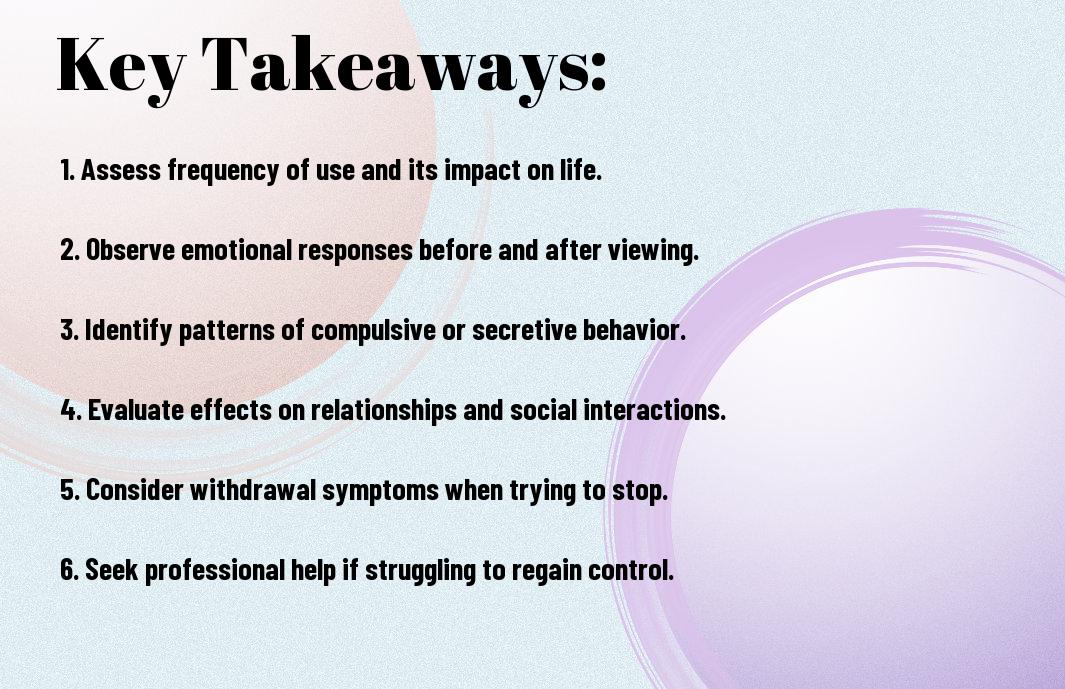
    Key Takeaways:

    • Understand the signs of porn addiction, such as compulsive use and neglecting daily responsibilities.
    • Assess your emotional well-being and note how porn consumption affects your relationships and mental health.
    • Identify triggers and situations where you are more likely to turn to porn, promoting self-awareness.
    • Consider the impact of porn on your sexual expectations and experiences, comparing fantasy to reality.
    • Seek support through therapy, counseling, or support groups to address addiction and promote healing.
    • Adopt healthier coping mechanisms to manage stress and emotions instead of relying on porn as an escape.
    • Commit to personal growth and transformational changes, focusing on building healthier relationships and self-esteem.

    Porn Addiction: How to Know If You Have One – 5 Powerful Transformations

    Understanding Porn Addiction

    For many individuals, the line between healthy sexual exploration and porn addiction can be blurred. It is crucial to understand that porn addiction can significantly impact your daily life, relationships, and mental health. Recognizing the signs and symptoms can empower you to take proactive steps towards healing and reclaiming control over your sexuality.

    Defining Porn Addiction

    After reviewing various psychological definitions, porn addiction can be understood as a compulsive behavior characterized by persistent engagement with pornography despite negative repercussions. This behavior often leads to a decline in overall well-being, affecting your emotional and social life while creating a disconnect from real intimacies.

    Signs and Symptoms

    After identifying the definition, it is crucial to recognize the signs and symptoms of porn addiction. You may notice an increase in the time spent viewing porn, as well as feelings of guilt or shame regarding your habits. Additionally, you might find it challenging to maintain intimate relationships or experience a decrease in sexual satisfaction.

    Also, other signs may include using porn as a stress-relief mechanism or as an escape from real-life issues. You might prioritize pornography over personal or professional responsibilities, leading to further complications in your life. Being aware of these patterns can help you assess your relationship with porn more effectively and decide if it is time to seek help.

    Porn Addiction: How to Know If You Have One – 5 Powerful Transformations — illustration 2

    The Impact of Porn on Mental Health

    The connection between porn consumption and mental health is significant. Studies show that excessive porn use can lead to increased anxiety, depression, and lower self-esteem. This can create a cycle that negatively impacts your relationships and overall quality of life. Understanding these mental health effects is the first step toward managing and transforming your relationship with porn.

    Emotional Effects

    Before you can address your porn consumption, it’s important to consider its emotional implications. Many individuals experience feelings of guilt, shame, or embarrassment stemming from their viewing habits. These emotions can decrease your overall happiness and lead to social withdrawal, creating a barrier between you and healthy interactions with others.

    Cognitive Consequences

    Behind the emotional effects, porn use can also impact your cognitive functioning. Prolonged exposure may alter how you perceive intimacy, relationships, and sexual expectations, leading to distorted beliefs about what is normal and desirable.

    Even more concerning is the way porn can affect your brain’s reward system. Regularly consuming porn can create unrealistic standards for sexual experience, leading to difficulty in forming genuine connections with real partners.

    You may find that your arousal levels decrease when interacting with actual intimacy, ultimately strengthening a cycle of reliance on porn for sexual gratification instead of fulfilling relationships.

    Porn Addiction: How to Know If You Have One – 5 Powerful Transformations — illustration 3

    Identifying Personal Patterns

    Your journey to understanding a potential porn addiction begins by identifying personal patterns that may indicate problematic behavior.

    Take a moment to reflect on your habits, thoughts, and feelings surrounding pornography use. By examining the ways in which it integrates into your daily life, you can start to unravel whether it has exceeded healthy boundaries and discover the motivations driving your consumption.

    Frequency and Compulsion

    Across various scenarios, take note of how often you find yourself seeking out pornography and whether you feel compelled to engage in this behavior despite your intentions.

    If you notice a pattern of increased frequency or a sense of urgency that overrides your better judgment, it may signal an unhealthy attachment to porn. Understanding how these patterns manifest is key to assessing your relationship with this content.

    Triggers and Situational Context

    Against this backdrop, it is important to examine the triggers and situational contexts that lead you to consume pornography.

    Identifying specific scenarios—such as feelings of stress, loneliness, or boredom—that precede your use can help paint a clearer picture of what drives your behavior. This awareness can guide you toward healthier coping mechanisms and allow you to make more conscious choices.

    Situational contexts often play a significant role in shaping your relationship with pornography. Factors such as stress from work, relationship challenges, or even an idle moment can serve as triggers, pushing you towards seeking fulfillment through porn.

    Understanding these contexts can help you develop alternative strategies for dealing with triggers, thereby fostering healthier habits and emotional responses when faced with similar situations in the future.

    Porn Addiction: How to Know If You Have One – 5 Powerful Transformations — illustration 4

    Transformative Steps Toward Recovery

    Unlike the notion that overcoming a porn addiction is a solitary endeavor, the journey to recovery often involves a series of transformative steps that can reshape your life.

    These steps provide a roadmap for regaining control and fostering healthy habits, allowing you to move beyond the confines of addiction and reconnect with your values and desires. Embracing this path not only brings personal growth but also enhances your relationships and overall well-being.

    Acknowledgment and Acceptance

    Among the first steps in your recovery journey is acknowledging the existence of your porn addiction. Acceptance is pivotal; it involves understanding how this behavior has affected your life and recognizing that change is not only necessary but possible. By owning your experience, you create a strong foundation that will empower you as you move forward on your path to recovery.

    Seeking Professional Help

    Recovery can be significantly enhanced by seeking professional help.

    A qualified therapist or counselor specializing in addiction can provide you with the tools and strategies necessary to confront underlying issues contributing to your addiction. They can guide you in developing healthier coping mechanisms and help you navigate the emotional challenges that arise during recovery.

    Engaging in group therapy can also foster a sense of community and shared experience, allowing you to connect with others who understand your struggles and victories. Investing in professional support can make a substantial difference in your journey toward lasting change.

    Building Healthy Relationships

    Keep in mind that developing healthy relationships is vital for overcoming porn addiction. This process involves fostering genuine connections with others, built on trust and openness. By prioritizing these relationships, you can create a support system that encourages growth and healing.

    Communication with Partners

    By fostering open communication with your partners, you can address any issues related to your addiction. Sharing your feelings, struggles, and progress allows for a deeper understanding and creates a safe space for both you and your partner. This transparency encourages emotional intimacy, which is important for nurturing a healthy relationship.

    Establishing Boundaries

    To establish boundaries in your relationships, it’s important to know what you need to support your recovery. Clear boundaries can help you maintain a balance between your personal growth and your relationships, preventing feelings of guilt or pressure to engage in behaviors that may hinder your progress.

    But setting boundaries requires honesty and self-awareness. You need to articulate your limits to your partner and ensure they understand your goals.

    This can involve discussing topics like physical intimacy, shared media consumption, and how you navigate social situations. By establishing these boundaries, you create an environment that supports your healing journey, allowing both you and your partner to thrive together.

    Maintaining Long-term Recovery

    After acknowledging your porn addiction, maintaining long-term recovery becomes paramount. This involves continuous self-reflection, setting personal goals, and fostering healthy habits that support your journey.

    Engaging in activities that align with your values and contribute positively to your life can significantly enhance your chances of sustained recovery. Embracing a mindset of growth and resilience will help you navigate challenges without falling back into old patterns.

    Support Systems

    The importance of a supportive network cannot be overstated. Surround yourself with understanding friends or family who respect your journey toward recovery. Consider joining support groups, either in person or online, where you can share experiences and gain insights from others facing similar challenges. Knowing that you are not alone can empower you to stay committed to your recovery process.

    Mindfulness and Coping Strategies

    By incorporating mindfulness and effective coping strategies into your daily routine, you can better manage triggers and cravings associated with porn addiction. Practicing mindfulness helps you stay present, reducing stress and anxiety that may lead to relapses.

    It is crucial to explore various coping techniques, such as meditation, deep-breathing exercises, and journaling, to strengthen your emotional resilience.

    These practices encourage self-awareness and help you identify thought patterns that may lead to urges. Additionally, creating a list of healthy alternatives to turn to when cravings arise can provide you with immediate options to redirect your thoughts and maintain your focus on recovery.

    Conclusion

    Drawing together the insights from the five powerful transformations can help you clearly recognize the signs of a porn addiction in your life. By assessing your behaviors, emotions, and interpersonal relationships, you can start to understand such patterns that may indicate a compulsion.

    Acknowledging these signs is the first step toward making informed changes and seeking support, empowering you to regain control over your habits and foster healthier relationships with intimacy and sexuality.

    FAQ

    Q: What are the signs that may indicate I have a porn addiction?

    A: Some common signs of porn addiction include the inability to control your consumption of pornography, spending excessive time viewing porn, neglecting personal and professional responsibilities, feeling compelled to watch porn even when you want to stop, and experiencing negative emotional states such as guilt or shame after viewing.

    Q: How can I differentiate between a healthy interest in porn and an addiction?

    A: It’s important to assess the impact of porn on your life. If your interest in porn leads to negative consequences—like relationship issues, impacts on your mental health, or interfering with daily activities—it might be a sign of addiction. In contrast, a healthy interest does not disrupt your life or cause distress.

    Q: What are the psychological effects of having a porn addiction?

    A: Porn addiction can lead to various psychological effects, including anxiety, depression, low self-esteem, and feelings of isolation. It may also alter perspectives on relationships and intimacy, making it harder to engage in healthy, real-life connections.

    Q: Can porn addiction affect my relationships with others?

    A: Yes, porn addiction can significantly affect personal relationships. It may lead to decreased intimacy with partners, unrealistic expectations about sex, and feelings of betrayal if a partner discovers the addiction. This can create trust issues and emotional distance in relationships.

    Q: What are some effective strategies for overcoming porn addiction?

    A: Overcoming porn addiction can involve several strategies, such as setting firm limits on usage, seeking professional counseling or therapy, joining support groups, practicing mindfulness techniques, and replacing porn consumption with healthier activities. Building a support system with friends or family can also be beneficial.

    Q: How does recognizing the problem aid in transformation from porn addiction?

    A: Acknowledging the existence of a porn addiction is the first step towards recovery. It allows individuals to take responsibility for their actions, seek help, and develop a concrete plan to transform their relationship with pornography. This recognition can empower individuals to make meaningful changes in their lives.

    Q: Are there resources available for individuals struggling with porn addiction?

    A: Yes, there are numerous resources available for those facing porn addiction. Online forums, support groups, dedicated websites, and professional therapists specialize in sexual health and addiction. Books and apps designed to help manage compulsive behaviors can also be effective tools in the recovery process.

    For additional support and clinical information on porn addiction recovery, see the Psychology Today overview.

    Related reading

  • The 30-Day Transformation Program for Porn Addiction Recovery

    The 30-Day Transformation Program for Porn Addiction Recovery

    Start with our signs of porn addiction guide for background.

    Just as you may seek to improve various aspects of your life, understanding your relationship with pornography can significantly impact your well-being. In this informative guide, we will explore whether porn addiction is detrimental and how you can commence on a transformative 30-day journey to regain control.

    Drawing insights from research on pornography addiction, you’ll learn practical strategies to navigate your challenges, empowering you to foster healthier habits and improve your overall mental health.

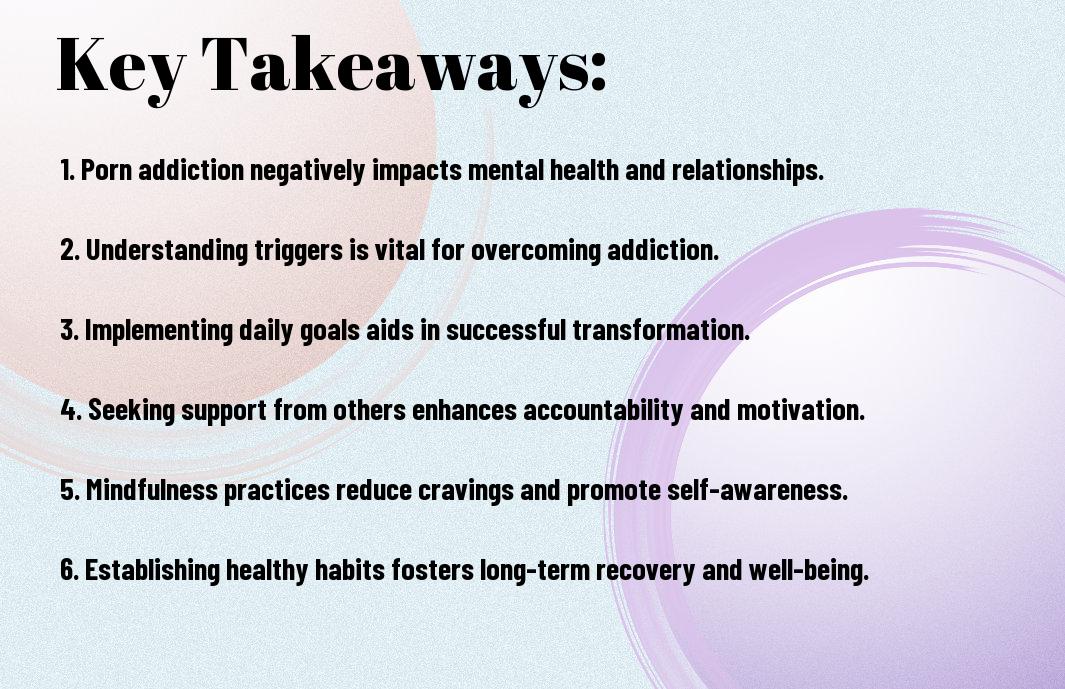
    Key Takeaways:

    • The program focuses on helping individuals recognize and break free from unhealthy patterns associated with porn consumption.
    • A 30-day structured plan is provided to guide participants through a transformative journey, promoting healthier behaviors and perspectives.
    • Emphasis is placed on understanding the psychological and emotional impacts of porn addiction, fostering self-awareness and personal growth.
    • Supportive community resources and accountability measures are encouraged to enhance motivation and sustain change.
    • Practical exercises and daily reflections are integrated to help individuals establish new habits and improve their overall well-being.

    Understanding Porn Addiction

    For many individuals, the consumption of porn can become an uncontrollable habit, leading to negative effects on both mental and emotional well-being. Understanding porn addiction helps you recognize its impact on your life and relationships, enabling you to pursue healthier pathways.

    As you explore this topic, you will gain valuable insights into how this behavior may affect your day-to-day experiences and personal growth.

    Definition of Porn Addiction

    Porn addiction refers to the compulsive consumption of pornographic material, which can lead to various struggles in your personal life, relationships, and overall mental health.

    It often manifests when you find yourself unable to stop or reduce your usage despite knowing the adverse effects it creates.

    Signs and Symptoms

    On your journey to understanding porn addiction, recognizing the signs and symptoms can empower you to take action.

    Common indicators include consuming pornographic content excessively, prioritizing it over important activities, or feeling a sense of shame or guilt associated with your viewing habits.

    Plus, be aware of how porn addiction may affect your emotional connections with others. You may notice a diminished interest in real-life intimacy, difficulty in forming genuine relationships, or even experiencing anxiety and depression related to your habits.

    Identifying these signs can help you assess the extent of your addiction and motivate you to seek guidance and support for change.

    The Impact of Porn Addiction

    If you find yourself relying on pornography, it’s important to understand how this addiction can significantly affect various aspects of your life. From mental health to interpersonal relationships, the repercussions can be profound, potentially leading to decreased satisfaction in both personal and romantic domains.

    Recognizing these effects is the first step toward making positive changes.

    Psychological Effects

    Below the surface, pornography addiction can lead to a range of psychological issues. You may experience heightened anxiety, depression, or feelings of inadequacy as your self-esteem diminishes.

    This constant comparison to unrealistic standards set by porn can distort your perception of intimacy, leaving you feeling more isolated and disconnected.

    Physical and Relationship Consequences

    Among the many consequences, physical health issues and relationship strain are common. You might face difficulties in sexual performance or a decrease in sexual desire, which can lead to frustration and disconnect with your partner.

    Over time, this disconnection can further damage your relationships, making it harder to establish genuine emotional connections.

    Considering the physical and relationship consequences, it’s vital to understand how porn addiction can manifest in your daily life. You may find that your sexual experiences become less satisfying, and communication with your partner can suffer.

    As you increasingly turn to porn for gratification, your relationships may lack the deep emotional bonding necessary for intimacy. This could lead to resentment, misunderstandings, and ultimately, the deterioration of significant connections in your life.

    The 30-Day Transformation Program for Porn Addiction Recovery

    The 30-Day Transformation Program

    Unlike other methods, a focused 30-day transformation program can significantly reshape your relationship with porn. This structured approach helps you identify triggers and establish new habits.

    For more insights, check out the all benefits for 90 days nofap (complete guide). Embrace the journey toward a healthier, more fulfilling lifestyle.

    Program Overview

    To begin your transformation, the program combines daily challenges, mindfulness exercises, and community support to help you stay accountable and motivated. It fosters an environment conducive to growth, allowing you to replace old habits with positive ones.

    Step-by-Step Guide

    Behind each successful transformation is a detailed plan that outlines your daily goals. The following table showcases the important steps you’ll take during this 30-day journey:

    Day

    Task
    1 Set your goals and intentions
    2 Identify triggers
    3 Start daily journaling

    Additional Step-by-Step Breakdown

    In addition to the daily tasks, focusing on specific themes can enhance your understanding and commitment throughout the program. The following table outlines the weekly themes designed to guide your progress:

    Week

    Theme
    1 Awareness and Reflection
    2 Healthy Coping Mechanisms
    3 Building a Support Network
    4 Sustaining Positive Change

    The 30-Day Transformation Program for Porn Addiction Recovery — illustration 2

    Strategies for Overcoming Porn Addiction

    Now that you recognize the impact of porn addiction, it’s important to implement effective strategies to reclaim control over your life. Various approaches, such as setting personal boundaries, identifying triggers, and practicing mindfulness, can significantly enhance your journey toward recovery.

    Embrace these strategies as you work through the 30-day transformation, focusing on consistent progress and self-improvement. You are on a path to a healthier mindset and lifestyle.

    Coping Mechanisms

    Before tackling your porn addiction, it’s vital to develop coping mechanisms that will help you manage cravings and emotional triggers. Techniques such as journaling, meditation, or engaging in physical activities can serve as outlets for stress and anxiety.

    By replacing your urges with healthier alternatives, you can cultivate resilience throughout your transformation journey.

    Building a Support System

    Mechanisms for recovery become significantly stronger when paired with a supportive network. Seek encouragement from friends, family, or support groups who understand your struggles and can uplift you during challenging moments.

    Surrounding yourself with people who share similar goals can provide accountability, motivation, and valuable insights to navigate your journey toward overcoming porn addiction.

    This support system serves as a lifeline, allowing you to express your feelings and fears openly. Engaging with like-minded individuals, either in person or online, fosters an environment where you can learn from one another.

    You may find that sharing your experiences and concerns leads to personal growth and the realization that you are not alone in this battle. Investing time in nurturing these relationships will enhance your recovery and strengthen your resolve to break free from addiction.

    Success Stories and Testimonials

    Not everyone believes they can overcome their porn addiction, but countless individuals have transformed their lives by committing to change.

    These success stories serve as powerful reminders that with dedication and the right strategies, you can reclaim control over your mind and your habits, leading to healthier relationships and enhanced well-being.

    Real-Life Transformations

    Before initiateing on their journey, many individuals felt trapped in a cycle of compulsive behavior, struggling with feelings of shame and isolation. Through consistent effort and support, they discovered profound personal growth and the power of healthier choices.

    As they shared their experiences, it became evident that transformation is not only possible but attainable for you too.

    Key Takeaways

    Between the various success stories, a few key themes emerge that can guide your own transformation. The importance of support networks, the value of personal accountability, and the necessity of understanding triggers are vital components in overcoming addiction.

    As you initiate on your journey, focusing on these elements can aid you immensely.

    Understanding that your journey may mirror those of others can be empowering. You may find strength in connecting with people who have faced similar challenges. Emphasizing community support, setting achievable goals, and practicing self-compassion can greatly enhance your chances of success.

    By focusing on these key takeaways, you can create a sustainable plan for change that aligns with your personal values and goals. Your transformation is not just about stopping a habit; it’s about embracing a healthier, more fulfilling life.

    The 30-Day Transformation Program for Porn Addiction Recovery — illustration 3

    Resources for Further Support

    Despite the challenges you may face in overcoming porn addiction, numerous resources are available to help you on your journey. Utilizing these tools can empower you to transform your relationship with pornography and foster a healthier mindset.

    Engaging with literature and support systems tailored to your needs can be instrumental in achieving your goals.

    Recommended Books and Articles

    Any thorough exploration of porn addiction can be significantly enhanced by delving into well-researched books and articles. Literature on the psychological, emotional, and practical aspects of addiction provides insights that can fuel your progress.

    These resources will bolster your understanding and equip you with strategies for overcoming this challenge.

    Support Groups and Online Communities

    Against the backdrop of personal struggles, connecting with others who understand your experience can be transformative. Support groups and online communities offer safe spaces where you can share your challenges and celebrate your victories.

    These platforms provide crucial encouragement and accountability as you work through your addiction.

    This shared experience fosters camaraderie and allows you to gain insights from individuals facing similar challenges. In these supportive environments, you can exchange coping strategies, celebrate milestones, and feel less isolated in your journey.

    Exploring forums, social media groups, or local meetups will enhance your ability to connect with others and create a supportive network around you.

    The 30-Day Transformation Program for Porn Addiction Recovery — illustration 4

    Final Words

    To wrap up, overcoming porn addiction can significantly enhance your well-being and relationships. By following a structured 30-day transformation plan, you can break free from unhealthy habits and gain a deeper understanding of your desires.

    This journey not only empowers you to reclaim control over your life but also fosters healthier perspectives on intimacy and connection. Embrace this opportunity to grow and redefine your relationship with yourself and others, paving the way for a more fulfilling future.

    FAQ

    Q: What is ‘Is Porn Addiction Bad Proven Guide – 30-Day Transformation’?

    A: The ‘Is Porn Addiction Bad Proven Guide – 30-Day Transformation’ is a comprehensive program designed to help individuals understand the negative impacts of porn addiction and guide them through a 30-day process to overcome it.

    The guide offers resources, techniques, and insights aimed at fostering healthier relationships with sexuality and enhancing personal well-being.

    Q: Who can benefit from this guide?

    A: This program is suitable for anyone who feels that their porn consumption is affecting their life negatively. This includes individuals struggling with addiction, those looking to reshape their sexual habits, or even partners of those who might be dealing with porn addiction.

    It aims to provide support and understanding for a wide audience.

    Q: What methods are used in the transformation process?

    A: The transformation process incorporates various methods, including journaling exercises, mindfulness practices, educational resources, and actionable tasks to help individuals identify triggers and develop healthier coping mechanisms.

    It also focuses on promoting self-awareness and rebuilding self-esteem.

    Q: How long does the program take to complete?

    A: The program is structured over a 30-day period, allowing participants to engage with the content at a manageable pace. The daily tasks and reflections are designed to create gradual yet significant changes over the month.

    Q: Is there any scientific backing for the claims made in the guide?

    A: Yes, the guide draws on research from psychology, neuroscience, and addiction studies to highlight how excessive porn consumption can alter brain chemistry and affect personal relationships. It provides evidence-based insights that support the need for change in certain habits and behaviors.

    Q: Can the guide be used alongside therapy or counseling?

    A: Absolutely. The program can serve as a supplementary tool to therapy or counseling.

    Many individuals find that combining such resources with professional support enhances their understanding and progress. It’s encouraged to communicate with healthcare providers about the use of additional self-help resources.

    Q: What happens after the 30 days are completed?

    A: After completing the 30-day program, participants are encouraged to continue implementing the learned strategies into their daily lives for lasting change.

    They may choose to set new goals, join community support groups, or further explore self-growth opportunities to maintain progress and reinforce positive habits.

    Understanding porn addiction is essential for recovery. Many people struggle with porn addiction silently, but recognizing the patterns of porn addiction is the first step toward change.

    Understanding porn addiction is essential for recovery. Many people struggle with porn addiction silently, but recognizing the patterns of porn addiction is the first step toward change.

    Related reading

    Skip to content