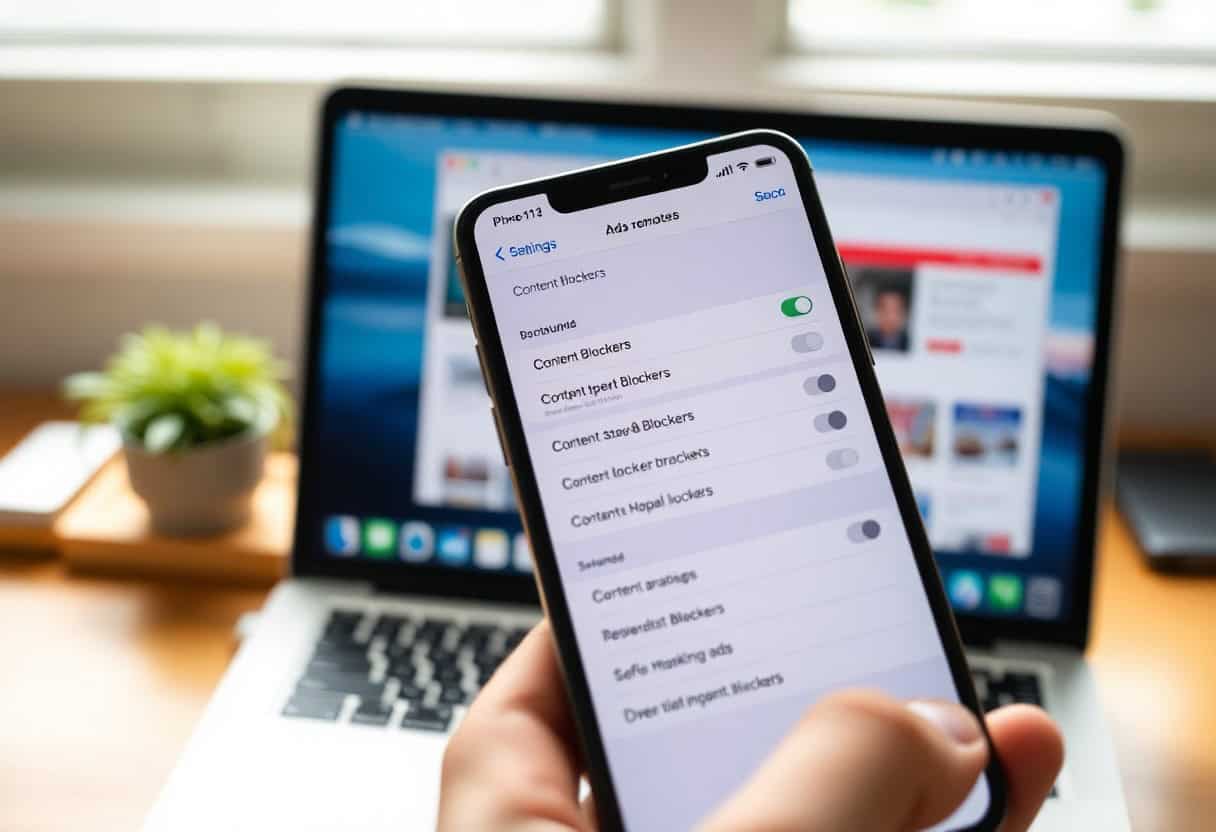
Content Blockers Iphone: this guide explains content blockers iphone in plain terms and gives you clear, practical steps you can act on today. Understanding content blockers iphone is the first move toward lasting change.
Table of Contents
Start with our signs of porn addiction guide for background.
Content blockers in Safari let you control trackers and ads so you can browse faster and with more privacy; this guide shows you how to enable, configure, and test them on iOS and macOS.
Porn Addiction: Core Concepts of Safari Content Blocking
Understanding the technical difference between blockers and extensions
Blockers in Safari use a declarative JSON ruleset so you specify URL patterns and actions that the browser enforces before resources load, which means you stop unwanted requests at the network layer and reduce what ever reaches pages you visit.
Extensions run scripted logic with access to page DOM and network events, so you can implement adaptive behaviors that react to content changes but you also expand the permissions surface and increase what third parties could access if misused.
Performance implications matter for you: since blockers act earlier, they lower CPU and memory use and shrink attack surface, while extensions offer deeper control at the trade-off of higher runtime privileges and complexity you must manage.
How the Safari API prioritizes user privacy over traditional methods
Apple designed the API to evaluate rules inside the browser process so you avoid installing background agents that might monitor pages, keeping decisions local and reducing telemetry about which sites you visit.
Rule matching executes on-device against domains and resource types you enable, preventing extensions from running arbitrary scripts that could fingerprint or harvest page data about you.
Local enforcement cuts down external calls and removes the need to upload full blocklists to third-party servers, giving you stronger guarantees that your blocking choices and browsing habits stay on your device.
Testing different configurations lets you confirm that trackers and ads are blocked without granting extra privileges; you can toggle rule sets and inspect network requests to validate privacy gains for your browsing.
Essential Factors for Choosing the Right Blocker
- Check update cadence and changelogs.
- Measure runtime impact on your device.
- Confirm developer privacy practices.
Evaluating the frequency of filter list updates
Check how often the blocker receives filter list updates and whether those updates install automatically on your device so new trackers and ad patterns get blocked without manual intervention.
Look for clear changelogs and transparent sources for rules, since you will want to see evidence that maintainers respond quickly to emerging threats and fix false positives.
Assess whether the blocker lets you add or prioritize lists and how update timing aligns with the sites you visit, because timely fixes reduce exposure while preserving useful content.
Checking for minimal impact on system memory and battery
Monitor whether the blocker uses Safari’s native content-blocker API rather than running persistent background services that consume memory and battery when you are not browsing.
Measure real-world effects by running short browsing sessions before and after installation and by consulting independent benchmarks or user reports to identify abnormal drains.
Observe update patterns and helper processes, since frequent heavy compilations or always-on daemons will show up in Activity Monitor and shorten battery life.
Consider blockers that allow you to disable aggressive features or compile rules selectively so you can balance protection with device longevity.
Verifying developer integrity and data handling policies
Confirm that the developer publishes a clear privacy policy stating what is collected, how crash logs or analytics are handled, and whether telemetry is opt-in so you can avoid services that harvest browsing data.
Investigate the team’s public activity, issue responses, and whether the project accepts audits or third-party reviews to gauge commitment to security and transparency.
Scrutinize requested permissions and prefer blockers that process filters locally without forwarding hits to remote servers, since local handling minimizes exposure of your browsing patterns.
Thou should compare stated policies with observed behavior by monitoring network activity or checking privacy-focused communities for reports of telemetry or unexpected data flows.
How to Set Up Content Blockers on iPhone and iPad
Using the iOS Settings menu to activate extensions
Open the Settings app and scroll to Safari, then choose Extensions (or Content Blockers on older iOS versions) to see installed blockers. You can enable each extension by toggling its switch and checking any prompts for permissions; some apps also require you to enable “Allow on All Websites” or similar for full protection.
You should install the blocker from the App Store first if it doesn’t appear in the list.
Tap an extension name to view detailed controls and any links to the app’s internal settings where you can manage filter subscriptions or whitelists. You can disable or re-enable extensions quickly from this screen when a site needs to display blocked elements.
You will also see any developer-provided options and notes about what the extension blocks.
After you enable an extension, test it by loading a few ad-heavy pages in Safari and using the aA menu to check site-specific blocking status. You can turn an extension off per site from the aA menu if a page breaks, and then re-enable it when done.
You should monitor behavior for a short period to confirm the blocker behaves as expected.
Configuring specific blocking permissions within Safari
Within Safari you can fine-tune how content blockers behave per site using the aA menu in the address bar to turn content blockers on or off for the current page. You can also set global Safari preferences like Block Pop-ups and prevent cross-site tracking from Settings > Safari to complement extension filters.
You will find per-site controls useful when a necessary script or widget is being blocked.
Adjust extension order and priority where that option exists by returning to Settings > Safari > Extensions; when multiple blockers are active they may interact, so testing different combinations helps you avoid false positives. You can open the blocker app itself to add domains to a whitelist, enable specific filters (trackers, social widgets, scripts), or subscribe to curated blocklists.
You should keep filter subscriptions updated for best results.
Then reload pages after changing settings and use Private mode to compare behavior without cached rules; clearing Safari data can also reveal whether a blocker change took effect.
You can inspect broken site elements and selectively disable blocking for that site rather than removing the extension entirely, preserving overall protection while allowing the functionality you need.
Use the blocker app’s advanced options to control granular rules-allowlists, regex filters, and toggleable categories like trackers, scripts, or cookie prompts-and combine those with Safari’s site settings for precise control over what you see and what runs on each page.
How to Implement Content Blockers on macOS
On macOS you manage content blockers through Safari and System Settings, installing App Store extensions and granting necessary permissions. You should verify compatibility, keep rule lists updated, and test blocked elements on representative sites to confirm expected behavior.
Once an extension is added, you enable it in Safari > Settings > Extensions and toggle permissions for web content and trackers. You can also adjust system-level privacy controls to reduce cross-site tracking and limit unwanted connections.
Testing different blocker configurations helps you balance strict filtering with site functionality; you can temporarily disable strict rules when a site breaks and re-enable them afterward.
You should favor extensions that provide clear controls, frequent updates, and transparent privacy practices.
Managing extensions through the Safari Settings panel
Open Safari’s Settings panel and choose Extensions to view installed content blockers and their descriptions. You can inspect update frequency and published privacy details to decide which to keep enabled for daily use.
Enable or disable blockers individually and set cross-site tracking preferences to match your privacy goals. You can toggle JavaScript blocking or cookie restrictions per extension while observing site behavior for compatibility.
Manage extension order and permissions to prevent feature overlap; disable redundant options so one tool handles ads while another focuses on trackers. You should periodically review and remove outdated or conflicting extensions.
Adjusting per-site preferences for a tailored experience
Per-site preferences let you tailor blocking rules for specific domains, allowing important scripts to run while keeping strict filters elsewhere. You access these options from Safari’s Privacy settings or the site-specific menu and adjust what a page may load.
For sites you trust, you can permit trackers or media to preserve full functionality; for others, enforce stricter filters to block intrusive ads and fingerprinting attempts. You should test changes in a private window to observe immediate effects without cached data.
Customize site permissions to allow pop-ups, location, or camera only when required and restrict cookies to improve privacy without breaking logins. You can save presets for categories such as banking, shopping, and news to speed future adjustments.
Adjusting per-site settings also helps when a page relies on third-party services; whitelist specific domains instead of disabling protections globally, keeping your overall filter posture intact while restoring necessary features.
Pro Tips for Advanced Content Filtering
- Prioritize vital domains to whitelist before broad filtering.
- Use wildcards for related subdomains rather than adding each individually.
- Test site functionality immediately after whitelist changes.
- Review and prune whitelists on a regular schedule.
| Tip | Why it matters |
|---|---|
| Whitelist only core services | Prevents accidental breakage of logins, payments, and sync. |
| Use pattern-based rules | Saves time and reduces oversight when sites use multiple subdomains. |
| Manual hiding tools | Gives precise control over visual clutter without disabling blocking. |
| Sync settings across devices | Keeps behavior consistent on iPhone, iPad, and Mac. |
Creating custom whitelists for vital web services
You can protect site functionality by adding only the domains that must run unfiltered, such as your bank, cloud drives, or corporate SSO providers; include top-level domains and obvious subdomains to avoid missing a resource that breaks critical features.
Start by opening your content blocker’s whitelist interface or Safari’s per-site settings, then add domains with wildcards where appropriate (for example, *.example.com) so related services remain accessible without exposing unrelated trackers.
Keep a short, focused list and test each entry immediately; after whitelisting, perform the actions you need on the site-log in, upload, complete payments-and remove any entries that aren’t necessary to minimize exposure to trackers.
Using the “Hide Distracting Items” tool for manual cleaning
Create precise hides by activating the tool, selecting the unwanted element, and confirming the rule; you control CSS selectors and visibility without altering global blocking, so you can remove banners, inline video thumbnails, or comment threads while leaving vital functionality intact.
Test the page after applying hides because some elements are dynamically generated; if an element reappears after navigation or refresh, refine the selector to target a parent node or use attribute-based rules to make the hide persistent across loads.
Use the tool sparingly and name or annotate your custom hides if the blocker supports it, so you can distinguish intentional visual edits from accidental disruptions when reviewing your custom rules later.
Adjust your manual hides when sites update their markup: inspect the changed element, update the selector, and reapply the rule instead of removing it wholesale, which keeps the browsing experience clean while preserving site features you rely on.
Syncing blocker settings across multiple Apple devices
Set the same Apple ID on all devices and enable Safari and the content-blocker extension in iCloud settings when the extension supports iCloud sync; this keeps whitelists, custom hides, and filter rules consistent between your iPhone, iPad, and Mac.
Sync third-party blockers using their built-in cloud accounts or export/import features when iCloud isn’t available; sign into the same vendor account on each device and allow rule synchronization to propagate changes instantly.
Enable automatic updates for both Safari and your blocker app so rule formats and sync methods stay compatible across OS versions; outdated versions can prevent rules from syncing or apply them inconsistently.
Confirm sync status by checking the blocker’s sync indicator or visiting a test page on each device after changes; if discrepancies appear, force a sync or sign out and back into the blocker account to resolve conflicts.
Troubleshooting Factors and Maintenance
- Identifying and fixing broken website functionality
- Temporarily bypassing blockers for secure transactions
- Monitoring page load performance and data savings
Identifying and fixing broken website functionality
If you encounter missing images, unresponsive controls, or forms that fail to submit, start by disabling content blocking for the affected domain and reloading the page to isolate the issue. You should use Safari’s Web Inspector or a private window to see blocked network requests and console errors that point to specific scripts or resources.
Document each change so you can back out adjustments that introduce new problems.
When a single rule appears responsible, edit or temporarily disable that filter rather than turning off all protections; target the offending script, frame, or tracker by name and test again. You should test the site across mobile and desktop modes to ensure the fix applies consistently and doesn’t break other features.
Keep a simple changelog of site-specific exceptions for future reference.
Testing with alternate filter lists helps determine whether a global list is too aggressive for certain sites, and you can compare behavior after switching lists to find the minimal relaxation needed. You should clear cache and cookies between tests to avoid stale assets skewing results.
Use what you learn to refine per-site rules and preserve overall protection.
Temporarily bypassing blockers for secure transactions
To complete payments or bank interactions, permit only the scripts and third-party resources required by the checkout domain and confirm that the connection is HTTPS before submitting credentials. You should toggle site settings from Safari’s address bar rather than disabling all blockers, which preserves protection across your other tabs.
Limit the change to the shortest duration needed to finish the transaction.
Before entering sensitive information, inspect the certificate and domain to make sure you are on the legitimate site, and consider using private browsing when you relax rules briefly so cookies and trackers aren’t retained. You should avoid whitelisting broad domains and prefer precise, site-specific permissions that you can revoke later.
Keep screenshots or notes if troubleshooting payment failures.
After finishing the transaction, revoke any temporary permissions and clear site data to remove lingering tracking tokens or session artifacts that could be misused later. You should scan for unexpected redirects or additional scripts that executed during the relaxed session and report suspicious behavior to the site if needed.
Reinstating your normal blocker profile reduces ongoing risk.
While shortcut toggles speed the process, you should whitelist only the necessary endpoints or scripts and avoid blanket disabling so you minimize exposure during the transaction. Recognizing the balance between functionality and security ensures you complete payments safely.
Monitoring page load performance and data savings
Check page load times and bandwidth before and after enabling content blockers using Safari’s Web Inspector or simple timing tests so you can quantify improvements. You should identify which blocked resources yielded the largest data savings and note whether those savings came from heavy media, trackers, or ad networks.
Keeping a small log of measurements helps you compare configurations over time.
Observe network waterfalls to see exactly which requests are prevented and estimate bytes saved, while also noting CPU and rendering differences when scripts are blocked. You should test multiple representative pages rather than a single outlier to get realistic averages that guide filter adjustments.
Sharing concise results makes it easier to fine-tune filters without guesswork.
Compare performance across mobile and desktop to spot where blockers deliver the most benefit and where they may interfere with necessary functionality, and consider a lighter profile on constrained devices if needed. You should run brief A/B tests or use staged profiles to validate changes before applying them broadly.
Automating measurements reduces manual effort and surfaces trends faster.
Measure periodic performance after updates to your blocker lists or Safari itself and adjust rules if faster loads come at the cost of broken features. You should include a final check that data savings did not reduce accessibility or security.
Recognizing trade-offs between performance, functionality and privacy helps you choose settings that suit your routine.
To wrap up
With this in mind you can configure Safari content blockers to reduce ads and tracking while preserving site functions; open Settings, tap Safari, select Extensions, enable your chosen blocker, and grant per-site permissions for acceptable content.
You should test a variety of sites after enabling blockers to confirm logins, forms, and media still behave correctly, and you can add trusted domains to a whitelist to allow scripts where needed.
You will notice faster pages, reduced data use, and stronger privacy when you tune blocker settings for your habits, and you should review extension permissions and updates periodically to maintain performance and security.
Key Takeaways: Content Blockers in Safari
Understanding how content blockers in Safari work helps you choose the right tool for your needs. Most content blockers in Safari use Apple’s Content Blocker API, which processes filter rules locally without exposing your browsing history.
The best content blockers in Safari update their filter lists automatically, ensuring protection against newly identified tracking domains. Installing content blockers in Safari takes less than a minute through the App Store.
Content blockers in Safari differ from Chrome extensions because they operate at the system level rather than the browser level. This architecture makes content blockers in Safari more efficient and harder for websites to detect.
Privacy-focused users who test content blockers in Safari consistently find that pages load faster compared to the unblocked baseline. When you enable content blockers in Safari on iOS, the same rules apply to all websites without exception.
Content blockers in Safari on macOS share filter lists with their iOS counterparts, making cross-device consistency straightforward. Advanced users configure content blockers in Safari by importing custom filter lists from community sources like EasyList.
The impact of content blockers in Safari on energy consumption is measurable — eliminating ad-network scripts reduces CPU wake events significantly. If you experience broken pages after enabling content blockers in Safari, most apps include a per-site whitelist feature.
Parents who set up content blockers in Safari for children benefit from Apple’s Screen Time integration. Content blockers in Safari cannot be disabled by websites themselves, only by the user or device administrator.
Reviewing which domains are blocked by your content blockers in Safari helps you understand your browsing footprint. When combined with Screen Time, content blockers in Safari provide the most comprehensive parental control option on iOS.
Understanding Content Blockers Iphone
Key Takeaways: Content Blockers Iphone
- Understand content blockers iphone clearly — knowing how it works removes shame and makes change possible.
- Content Blockers Iphone is manageable — with the right plan, real progress usually starts within weeks.
- Address the root, not just the urge — lasting recovery from content blockers iphone tackles the underlying triggers.
- Support speeds it up — accountability and honest conversations make content blockers iphone far easier to overcome.
- Small daily habits win — consistent action beats willpower alone when dealing with content blockers iphone.
Apply This to Your Recovery
Start with one step today, then build from there. These guides go deeper on content blockers iphone and the wider recovery path:
- Best Porn Blockers 2026: Apps, Extensions & Software Compared
- How to Disable Pop-Up Blocker in Various Browsers?
- How to enable content blockers on different devices and browsers
For the clinical view of compulsive sexual behaviour, see Psychology Today’s overview of sex and pornography addiction.
FAQs: Content Blockers Iphone
Q: What are content blockers in Safari and how do they work?
A: Content blockers are Safari extensions or apps that prevent specific web resources from loading, using rule lists that match URLs, scripts, images, and CSS. They block ads, trackers, third-party scripts, and cosmetic elements before the browser requests them, which reduces data use and can speed up page loads.
Some blockers focus on privacy by stopping cross-site trackers, while others add cosmetic rules to hide placeholders and banners. Safari enforces content-blocking rules at the network/request level, so blocked items typically never reach the rendering engine.
Q: How do I install and enable content blockers on iPhone, iPad, and Mac?
A: On iPhone or iPad, download a content-blocker app from the App Store, then open Settings > Safari > Extensions (or Content Blockers) and toggle the extension on; open Safari, tap the aA icon in the address bar to confirm the extension is active for the current site. On Mac, install the blocker from the App Store or as a Safari extension, open Safari > Settings (or Preferences) > Extensions, and check the box next to the extension; use the aA menu in the toolbar to enable or disable blockers per site.
Some apps require you to open their app to configure filter lists, whitelists, or in-app settings after enabling the extension in Safari.
Q: How can I whitelist sites or create exceptions so websites still function correctly?
A: Use Safari’s per-site controls to allow content on a specific page: in Safari on iPhone/iPad or Mac, open the site, click or tap the aA icon, and choose Turn Off Content Blockers for that site; the setting applies only to the current domain. Many blocker apps provide in-app whitelists or a toolbar button to add exceptions without disabling all blockers for a site.
Create temporary exceptions for logins, paywalls, or interactive features, then re-enable blocking when you leave the site to keep protection on other pages.
Q: Can I use multiple content blockers at once, and how do I manage conflicts or ordering?
A: Safari combines rule sets from all enabled content-blocker extensions so multiple blockers can run together; there is no user-visible ordering because Safari merges the lists and applies all matching rules. Conflicts are rare but can occur when one blocker hides elements another expects to see; resolve conflicts by disabling one extension for the affected site or adjusting filter lists inside the blocker app.
Script-level blocking and advanced request modification are limited by Safari’s extension APIs, so use an app that offers the specific controls you need or pair content blockers with a trusted DNS-level or system-level privacy tool if deeper blocking is required.
Q: What should I try if a content blocker stops working or breaks websites?
A: Check that the extension is enabled in Settings > Safari > Extensions (or Safari > Settings > Extensions on Mac), then update the content-blocker app and Safari to the latest versions. Clear Safari’s cache and website data if pages behave oddly, and disable other extensions to rule out conflicts.
Use the aA menu to turn off content blockers for the affected site to test whether the blocker is the cause; if blocking rules are the issue, edit the blocker’s whitelist or contact the developer with site details and a reproducible case. On Mac, enable the Web Inspector (Develop menu) to inspect blocked network requests and identify which rule or extension is blocking content.
Related guides: Block Websites on Safari | What is a Content Blocker? | Enable Content Blockers
Further reading: Apple guide to content blockers in Safari | Apple Screen Time parental controls
Understanding porn addiction is essential for recovery. Many people struggle with porn addiction silently, but recognizing the patterns of porn addiction is the first step toward change.
Understanding porn addiction is essential for recovery. Many people struggle with porn addiction silently, but recognizing the patterns of porn addiction is the first step toward change.
Understanding porn addiction is essential for recovery. Many people struggle with porn addiction silently, but recognizing the patterns of porn addiction is the first step toward change.
Understanding porn addiction is essential for recovery. Many people struggle with porn addiction silently, but recognizing the patterns of porn addiction is the first step toward change.
Understanding porn addiction is essential for recovery. Many people struggle with porn addiction silently, but recognizing the patterns of porn addiction is the first step toward change.
Understanding porn addiction is essential for recovery. Many people struggle with porn addiction silently, but recognizing the patterns of porn addiction is the first step toward change.
Understanding porn addiction is essential for recovery. Many people struggle with porn addiction silently, but recognizing the patterns of porn addiction is the first step toward change.
Understanding porn addiction is essential for recovery. Many people struggle with porn addiction silently, but recognizing the patterns of porn addiction is the first step toward change.
Understanding porn addiction is essential for recovery. Many people struggle with porn addiction silently, but recognizing the patterns of porn addiction is the first step toward change.
Understanding porn addiction is essential for recovery. Many people struggle with porn addiction silently, but recognizing the patterns of porn addiction is the first step toward change.
Understanding porn addiction is essential for recovery. Many people struggle with porn addiction silently, but recognizing the patterns of porn addiction is the first step toward change.
Understanding porn addiction is essential for recovery. Many people struggle with porn addiction silently, but recognizing the patterns of porn addiction is the first step toward change.
Understanding porn addiction is essential for recovery. Many people struggle with porn addiction silently, but recognizing the patterns of porn addiction is the first step toward change.
Understanding porn addiction is essential for recovery. Many people struggle with porn addiction silently, but recognizing the patterns of porn addiction is the first step toward change.
Understanding porn addiction is essential for recovery. Many people struggle with porn addiction silently, but recognizing the patterns of porn addiction is the first step toward change.
Understanding porn addiction is essential for recovery. Many people struggle with porn addiction silently, but recognizing the patterns of porn addiction is the first step toward change.
Compare the tools: see our full guide to the best porn blockers of 2026 — apps, extensions and software compared.